Gran Canaria vs Tenerife for Cycling: Honest Comparison (2027)
The Canaries' two great climbing islands side by side, so you can pick the one that fits how you ride.
Side-by-side comparison
Hard data on Gran Canaria and Tenerife so you can pick what matters most for your trip.
| Dimension | Gran Canaria | Tenerife |
|---|---|---|
| Climbing & terrain | ||
| Signature climb | No single giant: variety of long climbs + Valley of the Tears (25%) | Mount Teide, 40+ km to above 2,000 m, longest in Europe |
| High point | Pico de las Nieves, 1,949 m | El Teide roads, above 2,300 m |
| Terrain character | Dense web of ridge roads, valleys, and varied climbs | One vast volcano you climb from every side |
| Training | ||
| Altitude training | Up to ~1,900 m: good, but not extreme | 2,000 m+ hotels (Parador): a genuine altitude camp |
| Vibe | ||
| Crowds and pro presence | Quieter, growing but under-the-radar | Busier: a long-established pro altitude-camp hub |
| Seasonality | ||
| Best season | Winter and pre-season (Nov to Mar), rides year-round | Winter and pre-season (Nov to Mar), rides year-round |
| Practical | ||
| Where to base | South coast (Maspalomas, Puerto de Mogan) | South (Los Cristianos, Costa Adeje) or north (Puerto de la Cruz) |
| Gearing needed | Low: 25% ramps on the Valley of the Tears | Low-ish: Teide is long and steady rather than steep |
| Average road bike rental, 7 days | €280 to €480 depending on bike level | €280 to €480 depending on bike level |
Climbing & terrain
No single giant: variety of long climbs + Valley of the Tears (25%)
Mount Teide, 40+ km to above 2,000 m, longest in Europe
Pico de las Nieves, 1,949 m
El Teide roads, above 2,300 m
Dense web of ridge roads, valleys, and varied climbs
One vast volcano you climb from every side
Training
Up to ~1,900 m: good, but not extreme
2,000 m+ hotels (Parador): a genuine altitude camp
Vibe
Quieter, growing but under-the-radar
Busier: a long-established pro altitude-camp hub
Seasonality
Winter and pre-season (Nov to Mar), rides year-round
Winter and pre-season (Nov to Mar), rides year-round
Practical
South coast (Maspalomas, Puerto de Mogan)
South (Los Cristianos, Costa Adeje) or north (Puerto de la Cruz)
Low: 25% ramps on the Valley of the Tears
Low-ish: Teide is long and steady rather than steep
€280 to €480 depending on bike level
€280 to €480 depending on bike level
In detail
A closer look at how Gran Canaria and Tenerife compare across the dimensions that matter most.
| Gran Canaria | Tenerife |
|---|---|
| The climbing | |
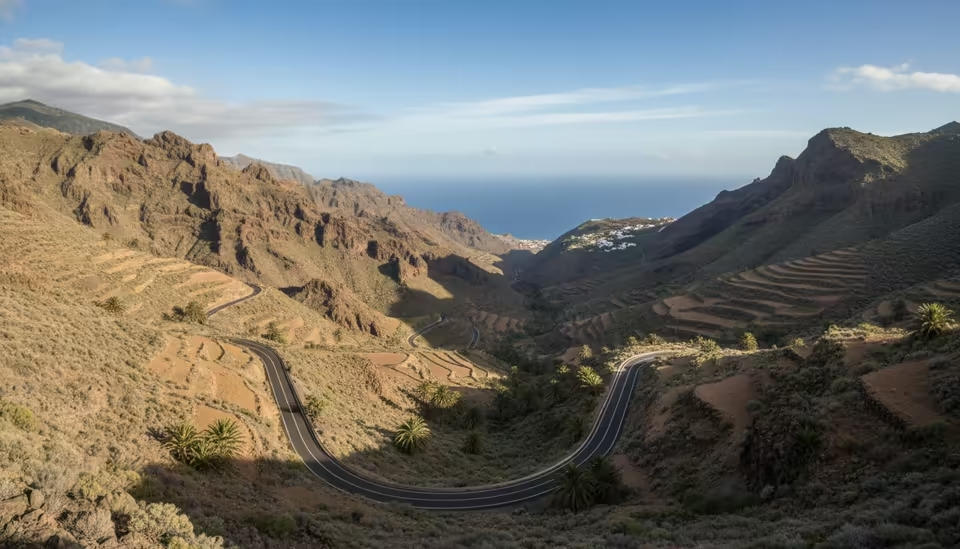
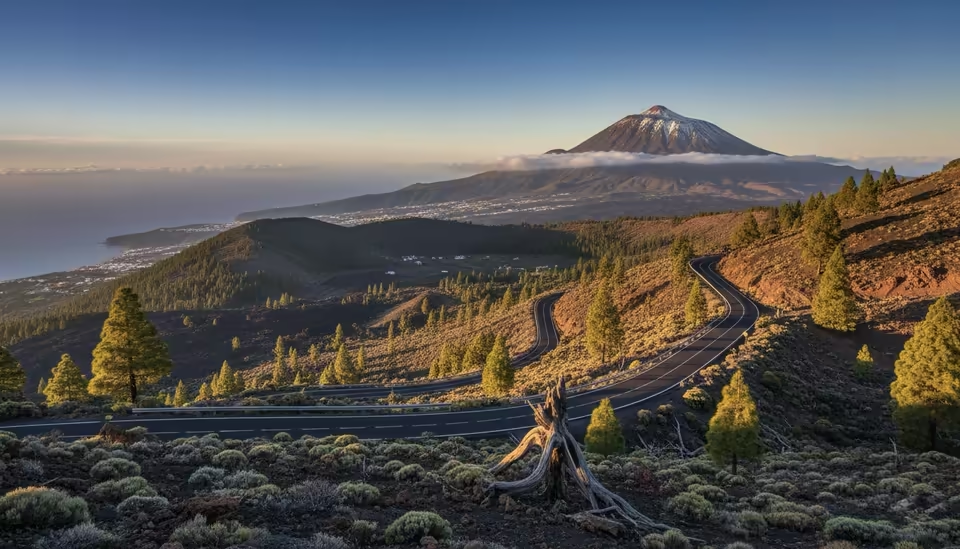
Gran Canaria is about variety. From the south coast the roads climb into a dense interior of long ascents, ridge roads and deep valleys around the Pico de las Nieves (1,949 m), Soria, and the Roque Nublo. The signature test is the Valley of the Tears (Valle de los Lagrimas), ramping to 25%. You can ride a different big climb every day, dropping into one valley and grinding back out on another, without repeating yourself. | Tenerife is about one vast mountain. Mount Teide dominates the island, and the ascent from the coast is the longest continuous climb in Europe, over 40 km gaining more than 2,000 m to road heights above 2,300 m. You can climb it from several sides (Los Gigantes, Vilaflor, La Orotava, El Portillo), each a huge day. It is less about variety than about the sheer scale of the one legendary climb. |
| Altitude and training | |
Gran Canaria tops out around 1,900 m, enough for excellent climbing but not for a true altitude camp. Its strength is volume and variety of climbing on quiet roads, and the reliable south-coast winter sun makes it easy to bank consistent training. It is increasingly a pro-camp base, but it stays calmer than Tenerife. | Tenerife is one of the world's premier altitude-training destinations. Hotels near the Teide caldera (the Parador) sit above 2,000 m, letting pros and serious amateurs sleep high and train on the mountain. That, plus the scale of Teide, is why the WorldTour peloton descends on the island each winter, and why the roads and cafes get busy in camp season. |
| Crowds and character | |
Gran Canaria is the quieter, more under-the-radar of the two. Its climbs are less famous, so you meet fewer big groups and less traffic, and you are more likely to ride solo or in a small group at your own pace. For riders who want serious mountains without the bustle, that low-key character is a real draw. | Tenerife is the busier, higher-profile island, with a long-established pro-camp culture built around Teide and altitude. In peak winter camp season the mountain roads and cafes fill with visiting cyclists and teams. If you like the buzz of a famous training hub and the chance to share the road with the pros, Tenerife delivers it. |
| Logistics and cost | |
Gran Canaria is reached via Las Palmas, with the rental and accommodation scene clustered in the south around Maspalomas and Puerto de Mogan, right at the foot of the big climbs. Renting locally lets you fly with hand luggage, and shops stock bikes with the low gearing the 25% ramps demand. Book early for the December-to-February peak. | Tenerife is reached via its two airports (Tenerife South is closest to the cycling bases). Riders base in the south (Los Cristianos, Costa Adeje) or, for a cooler, greener option, the north (Puerto de la Cruz). Rentals are widely available; because the island is a popular camp destination, book bikes and altitude accommodation well ahead for peak winter. |
The climbing
Gran Canaria
Gran Canaria is about variety.
From the south coast the roads climb into a dense interior of long ascents, ridge roads and deep valleys around the Pico de las Nieves (1,949 m), Soria, and the Roque Nublo. The signature test is the Valley of the Tears (Valle de los Lagrimas), ramping to 25%. You can ride a different big climb every day, dropping into one valley and grinding back out on another, without repeating yourself.
Tenerife
Tenerife is about one vast mountain.
Mount Teide dominates the island, and the ascent from the coast is the longest continuous climb in Europe, over 40 km gaining more than 2,000 m to road heights above 2,300 m. You can climb it from several sides (Los Gigantes, Vilaflor, La Orotava, El Portillo), each a huge day. It is less about variety than about the sheer scale of the one legendary climb.
Altitude and training
Gran Canaria
Gran Canaria tops out around 1,900 m, enough for excellent climbing but not for a true altitude camp.
Its strength is volume and variety of climbing on quiet roads, and the reliable south-coast winter sun makes it easy to bank consistent training. It is increasingly a pro-camp base, but it stays calmer than Tenerife.
Tenerife
Tenerife is one of the world's premier altitude-training destinations.
Hotels near the Teide caldera (the Parador) sit above 2,000 m, letting pros and serious amateurs sleep high and train on the mountain. That, plus the scale of Teide, is why the WorldTour peloton descends on the island each winter, and why the roads and cafes get busy in camp season.
Crowds and character
Gran Canaria
Gran Canaria is the quieter, more under-the-radar of the two.
Its climbs are less famous, so you meet fewer big groups and less traffic, and you are more likely to ride solo or in a small group at your own pace. For riders who want serious mountains without the bustle, that low-key character is a real draw.
Tenerife
Tenerife is the busier, higher-profile island, with a long-established pro-camp culture built around Teide and altitude.
In peak winter camp season the mountain roads and cafes fill with visiting cyclists and teams. If you like the buzz of a famous training hub and the chance to share the road with the pros, Tenerife delivers it.
Logistics and cost
Gran Canaria
Gran Canaria is reached via Las Palmas, with the rental and accommodation scene clustered in the south around Maspalomas and Puerto de Mogan, right at the foot of the big climbs.
Renting locally lets you fly with hand luggage, and shops stock bikes with the low gearing the 25% ramps demand. Book early for the December-to-February peak.
Tenerife
Tenerife is reached via its two airports (Tenerife South is closest to the cycling bases).
Riders base in the south (Los Cristianos, Costa Adeje) or, for a cooler, greener option, the north (Puerto de la Cruz). Rentals are widely available; because the island is a popular camp destination, book bikes and altitude accommodation well ahead for peak winter.
Which one is right for you?
Pick the destination that matches what you're really looking for.
Ready to ride? Pick your destination.
Browse the full bike inventory at each destination and book the bike that fits your trip.