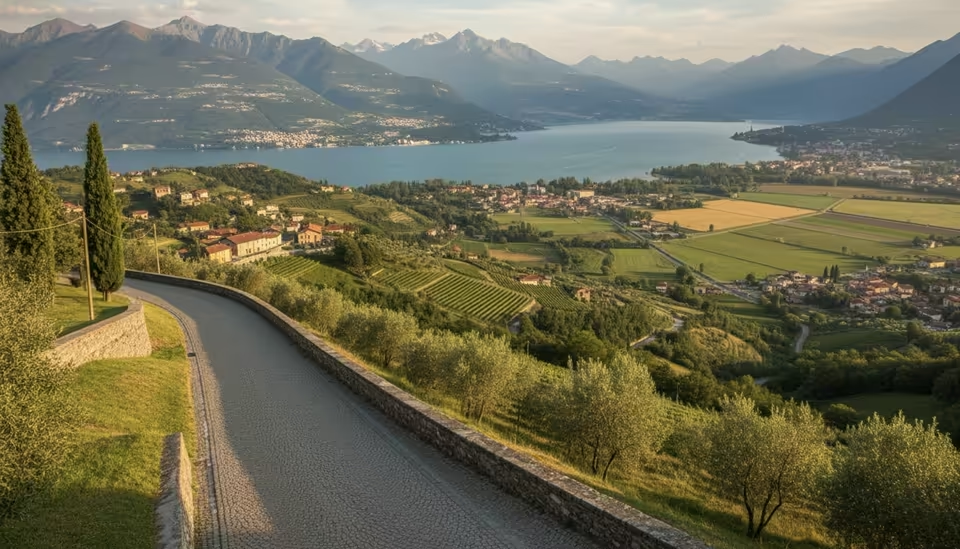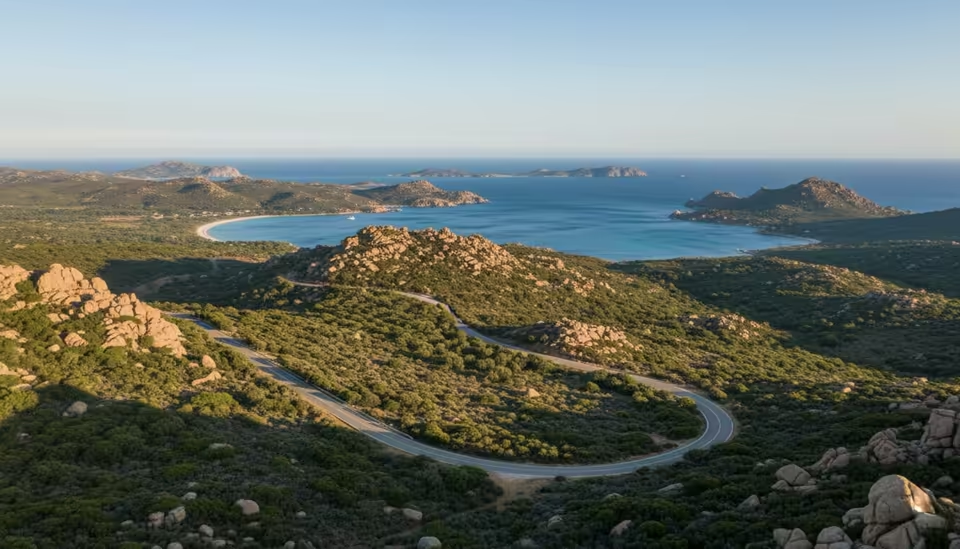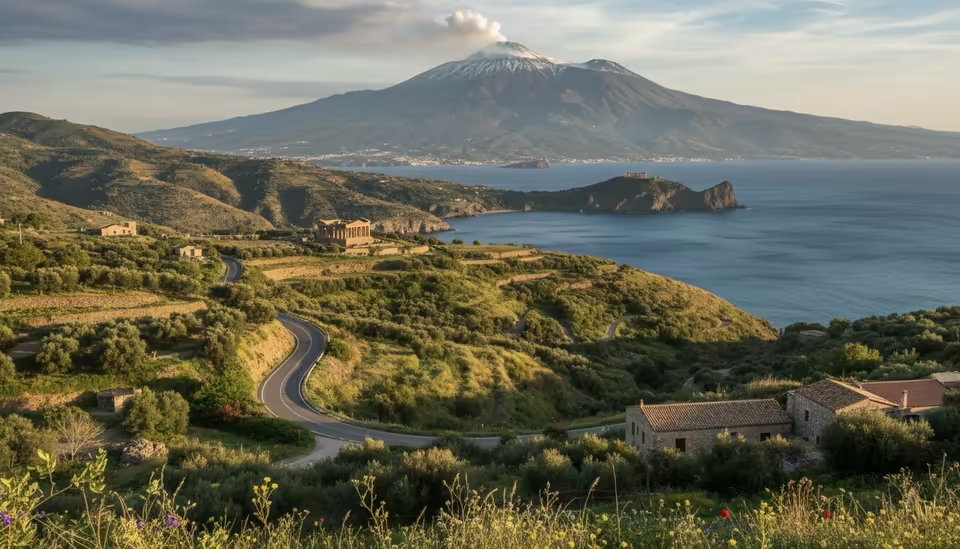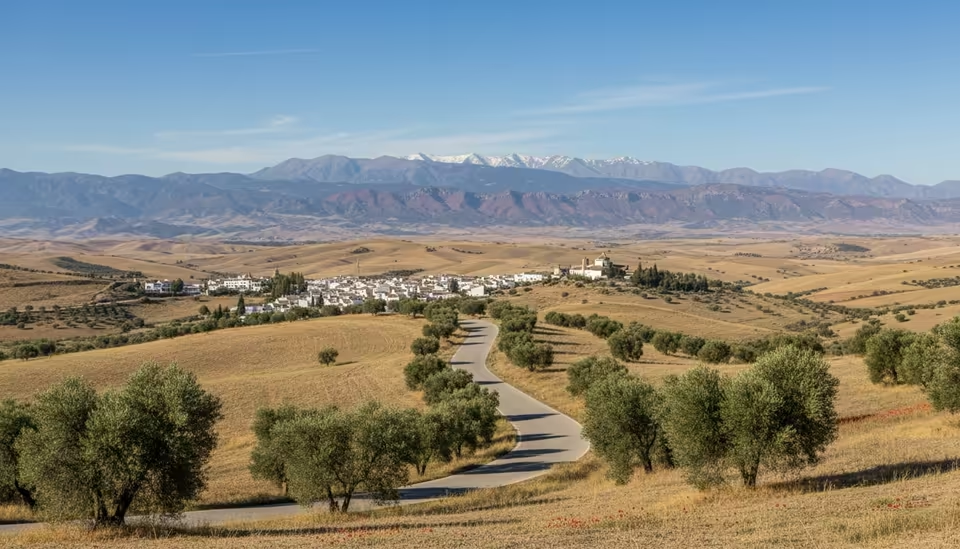
Tuscany is the destination cyclists reach for when the ride is only half the reason to travel. It is, first and above all, the gravel capital of Europe, the region that gave the sport the white roads of the Strade Bianche and the vintage cult of L'Eroica, and it wraps that riding in Renaissance towns, cypress ridges and arguably the best food and wine in Italy. Where an island trip is about stacking climbs, a Tuscany trip is about the whole day: a long loop through the hills, a village bar halfway, a glass of Chianti Classico where the kitchen and the bike rack are run by the same family. It rewards the cyclist who wants to ride and to be somewhere, not just to train.
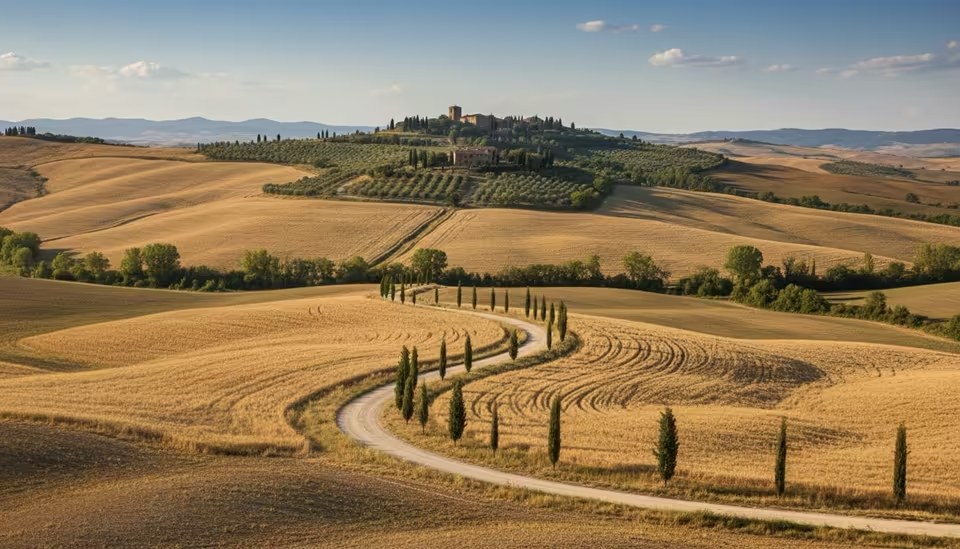
The signature terrain is the strade bianche themselves, the unpaved white gravel roads that thread through the Crete Senesi south of Siena. These are the roads the pros race each March, hard-packed clay-and-limestone that ride fast on a gravel bike and turn the rolling clay-hill countryside into a playground you could explore for a week without repeating a route. North of them, the Chianti hills give you the road side of Tuscany: vineyard-lined lanes and steady four-to-nine-kilometre climbs linking medieval villages like Greve, Radda and Gaiole. Further south the Val d'Orcia is postcard Italy made real, cypress-lined ridges and golden fields with Pienza, Montalcino and Montepulciano as hilltop base towns, each one a climb and a wine in its own right.
What Tuscany is not is a place of single, savage climbs. There is no Sa Calobra here, no forty-kilometre pass. The climbing is relentless in a different way, rolling and constant, so an average day still stacks a thousand to two thousand metres without you ever grinding up one giant wall. That suits endurance riders and gravel cyclists far better than pure climbers chasing a KOM, and it is a large part of why the region reads as touring country rather than a training camp. You ride from town to town, not up and back down the same road.
Timing is the same two golden windows that reward most of southern Europe, with a Tuscan twist. Spring, April through June, brings wildflowers, mild temperatures and the gravel-event calendar in full swing. Autumn, September and October, brings the vendemmia wine harvest, low golden light and thinning tourist crowds, and for many riders it is the best time of all to be here. Summer is genuinely hot on the inland gravel, so most cyclists go out at sunrise and are back before the worst of it; the coast and lower Chianti stay rideable through winter, though the inland hills turn cold and occasionally see snow.
The cycling culture runs deep and old. L'Eroica, the vintage festival that fills Gaiole every October with steel bikes and wool jerseys, and Strade Bianche, the modern pro classic each March, bookend a heritage of mixed-surface riding that is more than thirty years deep and woven into everyday Italian life. Every village has a bar that doubles as a cyclist's pit stop, every agriturismo seems to keep a pump and a spare rider's welcome. The English-speaking cycling-tourism scene is smaller and quieter than Girona's or Mallorca's, which is part of the appeal: guided tours, agriturismi and local shops are the natural way in, and the roads themselves feel less discovered.
Where you stay shapes the trip more than in a compact island. Florence works as an urban base with easy day-trips into Chianti and a real city on your rest day. Siena puts you closest to the Crete Senesi and the Val d'Orcia, and its medieval centre is a wonder in itself. A Chianti agriturismo, out around Gaiole, Greve or Castellina, is the classic immersion, where you ride straight from the door into the vineyards and never really touch a town. Many riders split the difference and run a multi-base trip, a few days in each, letting the terrain rather than a hotel dictate the week.
On what to ride, Tuscany leans gravel in a way few places do, and a gravel bike with room for 38 to 42 mm tyres is the single best choice for unlocking the strade bianche and the mixed loops that link them. That said the Chianti road riding is genuinely world-class, so a road bike is far from wasted here, and the honest answer for a first trip is a capable gravel bike that can do both. Rental shops are concentrated around Florence and the Chianti, with gravel specialists easier to find here than almost anywhere in Europe; booking ahead in spring and autumn is wise, as the good gravel bikes go first.
Logistics run through Florence or Pisa, both with airports and good rail links, and from there Tuscany rewards a rental car or guided transfers more than an island would, since the best of it is spread across the hills rather than clustered around one port. Renting your bike on the ground means you fly with hand luggage and skip the bag entirely, pick up a bike that fits, set your own pedals and saddle, and ride out the same day into the vineyards. That mix, world-class gravel, deep culture and a landscape that makes every photo look staged, is why Tuscany has quietly become the trip serious cyclists talk about for years after. Browse the bikes above to start planning, and see the comparison guides if you are still weighing it against Mallorca, Girona or a road-versus-gravel call.