Tuscany vs Mallorca for Cycling: Honest Comparison (2027)
Gravel-and-culture cyclo-tourism against Europe's benchmark road-climbing island, so you can pick the trip that fits how you ride.
Side-by-side comparison
Hard data on Tuscany and Mallorca so you can pick what matters most for your trip.
| Dimension | Tuscany | Mallorca |
|---|---|---|
| Climbing & terrain | ||
| Iconic climb | No single iconic climb: rolling Chianti + Val d'Orcia ridges | Sa Calobra, ~10 km at 7% |
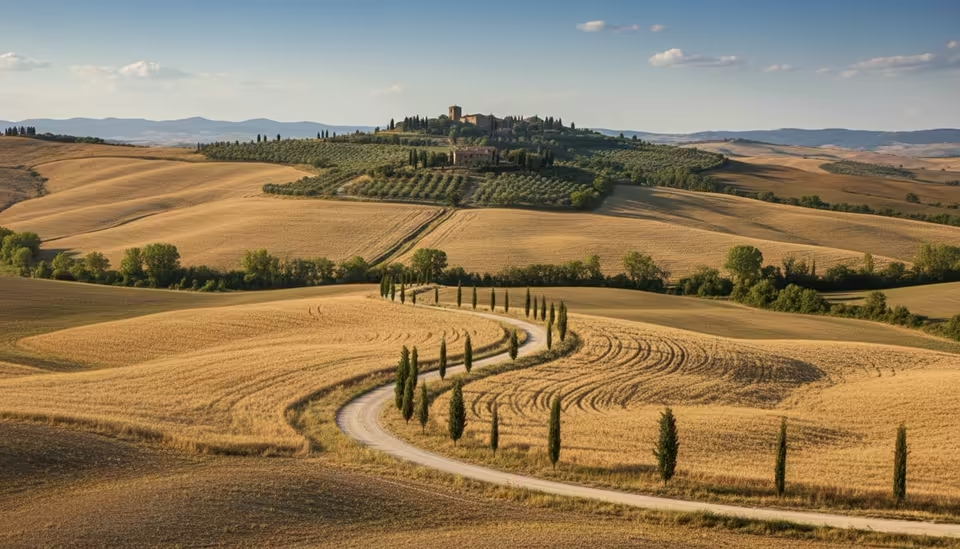
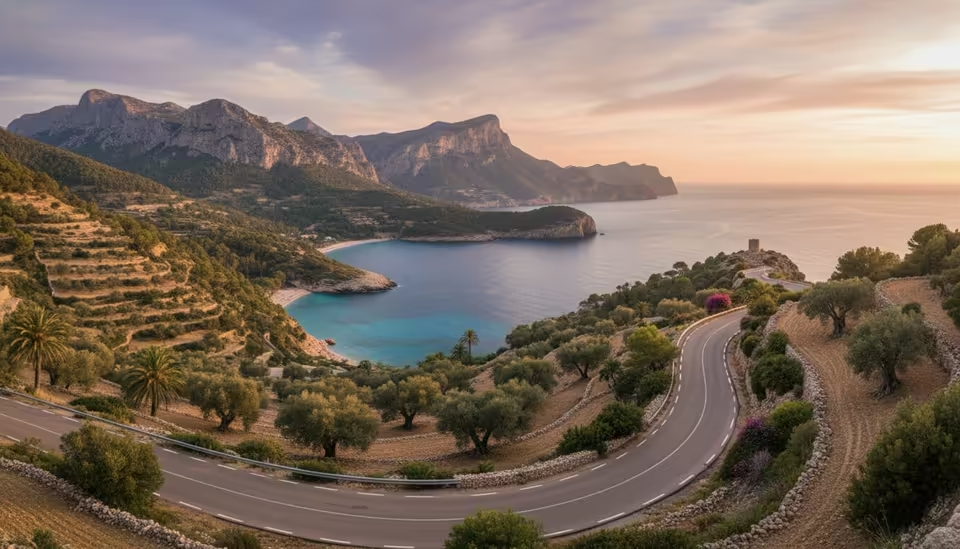
| Terrain character | Constant rolling hills, road + white-gravel | One big mountain range (Tramuntana) + flat plains |
| Average elevation per day | 1,000 to 2,000 m | 1,200 to 2,500 m |
| Discipline | ||
| Best discipline | Gravel + road equally: THE European gravel destination | Road dominant, gravel as a growing bonus |
| Seasonality | ||
| Best season | April to June, September to October | March to May, September to November |
| Pro presence | Strade Bianche race + L'Eroica anchor the calendar | WorldTour camps late January through March |
| Vibe | ||
| Off-bike feel | Renaissance towns + wine country + arguably Italy's best food | Cyclist-first resorts + cafe culture, less cultural depth |
| Group-ride scene | Distributed + quieter: guided gravel tours, agriturismi | Massive: Port de Pollenca group rides every 30 minutes in spring |
| Practical | ||
| Getting there | Florence or Pisa + a rental car for the spread-out hills | Palma airport, transfers under an hour, no car needed |
| Average road bike rental, 7 days | €280 to €500 depending on bike level | €280 to €500 depending on bike level |
Climbing & terrain
No single iconic climb: rolling Chianti + Val d'Orcia ridges
Sa Calobra, ~10 km at 7%
Constant rolling hills, road + white-gravel
One big mountain range (Tramuntana) + flat plains
1,000 to 2,000 m
1,200 to 2,500 m
Discipline
Gravel + road equally: THE European gravel destination
Road dominant, gravel as a growing bonus
Seasonality
April to June, September to October
March to May, September to November
Strade Bianche race + L'Eroica anchor the calendar
WorldTour camps late January through March
Vibe
Renaissance towns + wine country + arguably Italy's best food
Cyclist-first resorts + cafe culture, less cultural depth
Distributed + quieter: guided gravel tours, agriturismi
Massive: Port de Pollenca group rides every 30 minutes in spring
Practical
Florence or Pisa + a rental car for the spread-out hills
Palma airport, transfers under an hour, no car needed
€280 to €500 depending on bike level
€280 to €500 depending on bike level
In detail
A closer look at how Tuscany and Mallorca compare across the dimensions that matter most.
| Tuscany | Mallorca |
|---|---|
| The terrain | |
Tuscany is the gravel capital of Europe, and its riding is defined by the strade bianche, the white gravel roads that thread the Crete Senesi south of Siena and star in the pro race of the same name. North of them the Chianti hills give classic road riding: vineyard lanes and steady 4-to-9-kilometre climbs between medieval villages. The Val d'Orcia adds postcard ridges and hilltop towns like Montalcino and Montepulciano. There is no single savage climb, the effort comes from constant rolling terrain, which suits gravel and endurance riders more than pure climbers. | Mallorca is built around the Serra de Tramuntana, the mountain range along the north-west coast where the famous climbs live. Sa Calobra (around 10 km at 7%), the Puig Major and the Coll de Soller anchor a week of climbing, while the flat centre and coast give recovery spins and interval roads. The island's magic is the compactness: a brutal mountain day and an easy flat day can sit back to back without changing hotel. It is road-first country, with gravel a growing but secondary option. |
| Climate and season | |
Tuscany peaks April through June (wildflowers, mild temperatures, gravel events) and September through October (vendemmia wine harvest, golden light, thinning crowds), with autumn a favourite. Summer is genuinely hot on the inland gravel, so ride at sunrise. Winter is rideable on the coast and lower Chianti but the inland hills turn cold. | Mallorca's classic window is spring, late February to May, the pro-camp season, plus a quieter September and October. Winter stays milder than mainland Europe and the coast is rideable, though the high passes can be cold or closed. Summer is hot and best ridden early. The season runs a little earlier than Tuscany's, which is part of why the pros go there first. |
| Culture and food | |
This is where Tuscany pulls clear. Renaissance towns (Florence, Siena), Chianti and Brunello wine country, and arguably Italy's best food are woven into the riding, in Chianti the kitchen and the bike rack are often run by the same agriturismo family. L'Eroica in Gaiole each October and Strade Bianche in March give the calendar a heritage focal point. The cycling-tourism scene is smaller and quieter than Mallorca's, which many riders prefer. | Mallorca's culture is cyclist-first rather than deep-cultural: cafe stops as an institution, hundreds of cycling-friendly hotels, and a spring atmosphere where the whole island seems to run on cyclist time. Palma has real history and good food, but a Mallorca trip is fundamentally about the riding and the scene around it, not about the destination as a cultural experience in its own right. |
| Logistics and cost | |
Tuscany is reached via Florence or Pisa, and it rewards a rental car or guided transfers, the best of it is spread across the hills rather than clustered around one port. Multi-base trips (Florence, then Chianti, then the Val d'Orcia) work well. Renting on the ground lets you fly with hand luggage; gravel-specific bikes are easy to find and priced close to road. | Mallorca is about as easy as cycling travel gets: Palma airport connects to most of Europe, transfers to the north coast take under an hour, and you need no car, the bases (Port de Pollenca, Palma, Alcudia) put the riding on your doorstep. Rental fleets are the largest and best-stocked in Europe, so any size and spec is usually available at short notice. |
The terrain
Tuscany
Tuscany is the gravel capital of Europe, and its riding is defined by the strade bianche, the white gravel roads that thread the Crete Senesi south of Siena and star in the pro race of the same name.
North of them the Chianti hills give classic road riding: vineyard lanes and steady 4-to-9-kilometre climbs between medieval villages. The Val d'Orcia adds postcard ridges and hilltop towns like Montalcino and Montepulciano. There is no single savage climb, the effort comes from constant rolling terrain, which suits gravel and endurance riders more than pure climbers.
Mallorca
Mallorca is built around the Serra de Tramuntana, the mountain range along the north-west coast where the famous climbs live.
Sa Calobra (around 10 km at 7%), the Puig Major and the Coll de Soller anchor a week of climbing, while the flat centre and coast give recovery spins and interval roads. The island's magic is the compactness: a brutal mountain day and an easy flat day can sit back to back without changing hotel. It is road-first country, with gravel a growing but secondary option.
Climate and season
Tuscany
Tuscany peaks April through June (wildflowers, mild temperatures, gravel events) and September through October (vendemmia wine harvest, golden light, thinning crowds), with autumn a favourite.
Summer is genuinely hot on the inland gravel, so ride at sunrise. Winter is rideable on the coast and lower Chianti but the inland hills turn cold.
Mallorca
Mallorca's classic window is spring, late February to May, the pro-camp season, plus a quieter September and October.
Winter stays milder than mainland Europe and the coast is rideable, though the high passes can be cold or closed. Summer is hot and best ridden early. The season runs a little earlier than Tuscany's, which is part of why the pros go there first.
Culture and food
Tuscany
This is where Tuscany pulls clear.
Renaissance towns (Florence, Siena), Chianti and Brunello wine country, and arguably Italy's best food are woven into the riding, in Chianti the kitchen and the bike rack are often run by the same agriturismo family. L'Eroica in Gaiole each October and Strade Bianche in March give the calendar a heritage focal point. The cycling-tourism scene is smaller and quieter than Mallorca's, which many riders prefer.
Mallorca
Mallorca's culture is cyclist-first rather than deep-cultural: cafe stops as an institution, hundreds of cycling-friendly hotels, and a spring atmosphere where the whole island seems to run on cyclist time.
Palma has real history and good food, but a Mallorca trip is fundamentally about the riding and the scene around it, not about the destination as a cultural experience in its own right.
Logistics and cost
Tuscany
Tuscany is reached via Florence or Pisa, and it rewards a rental car or guided transfers, the best of it is spread across the hills rather than clustered around one port.
Multi-base trips (Florence, then Chianti, then the Val d'Orcia) work well. Renting on the ground lets you fly with hand luggage; gravel-specific bikes are easy to find and priced close to road.
Mallorca
Mallorca is about as easy as cycling travel gets: Palma airport connects to most of Europe, transfers to the north coast take under an hour, and you need no car, the bases (Port de Pollenca, Palma, Alcudia) put the riding on your doorstep.
Rental fleets are the largest and best-stocked in Europe, so any size and spec is usually available at short notice.
Which one is right for you?
Pick the destination that matches what you're really looking for.
Ready to ride? Pick your destination.
Browse the full bike inventory at each destination and book the bike that fits your trip.