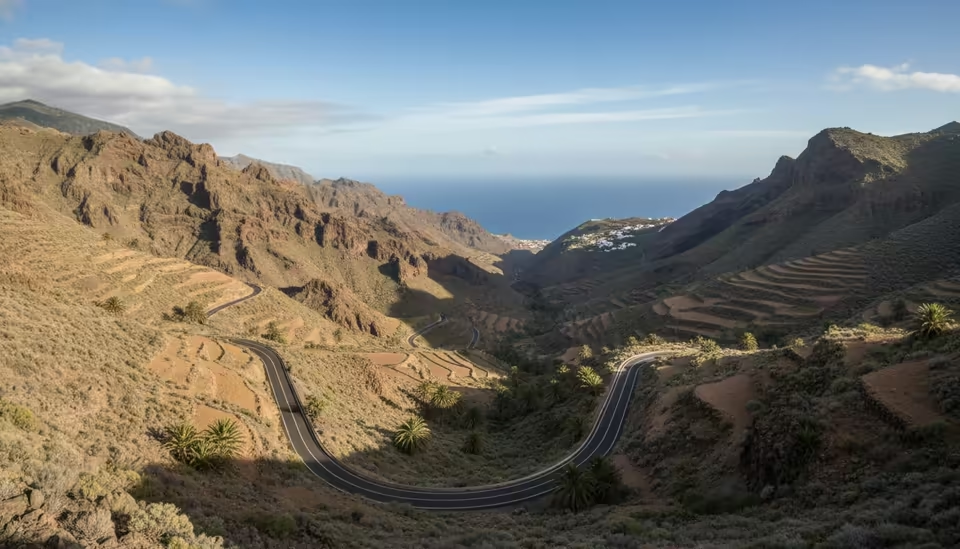
Gran Canaria is a continent in miniature, and for a cyclist that means one thing above all: real, big-mountain climbing. Where Lanzarote is about wind and Mallorca about variety, Gran Canaria is about elevation, a compact island whose roads climb from the coast into a genuine high-mountain interior and back down again, all under dependable Canary winter sun. It has quietly become one of the best places in Europe to build a serious climbing block when the rest of the continent is frozen, and it stays a good deal quieter than its more famous neighbours.
The headline is the ascent to the Pico de las Nieves, the island's high point at 1,949 metres. From the south coast the climb runs roughly forty-four kilometres and gains around 2,000 metres at an average of 4.6 percent, with a brutal three-kilometre section around eleven percent above the village of Ayacata. It is the kind of climb that defines a trip. The true iconic test, though, is the Valley of the Tears (Valle de los Lagrimas), which starts near sea level and ramps up to gradients of 25 percent as it winds into the volcanic interior, a climb strong riders come specifically to tick off. Soria, around twelve kilometres at seven percent, is known locally as the island's Alpe d'Huez.
What makes the riding so rewarding is that the interior is a dense web of long ascents, ridge roads and deep valleys, with far more vertical variety than any other Canary island. You can string together different big climbs day after day without repeating yourself, dropping into a valley on one road and grinding back out on another. This is a climber's island first and foremost: if your idea of a good cycling trip is stacking real elevation on quiet mountain roads, few places in winter-sun range compete with it.
The climate follows the same reliable winter-sun pattern that makes the Canaries a pre-season camp favourite. The south coast around Maspalomas stays warm and dry right through the European winter, making it an easy place to accumulate training volume while home is cold and wet. The big difference here is altitude: as you climb toward the Pico de las Nieves you gain real metres, the temperature drops noticeably near the top, and the green, cloud-catching north can feel like a different world from the arid south. Pack a layer for long descents off the summit even on a warm day.
Gran Canaria is the quietest and most under-the-radar of the three main Canary cycling islands. Its best routes are less famous than Tenerife's or Lanzarote's, which means fewer big groups and less traffic on the climbs, even as its pro-camp presence grows year on year. You are more likely to ride solo or in a small group, picking off long climbs at your own pace, rather than folding into a festival-sized bunch. For riders who want serious mountains without the crowds, that low-key character is a real draw.
Where you stay is mostly settled by the climbing. The rental and accommodation scene clusters in the south around Maspalomas and Puerto de Mogan, right at the foot of the Soria and Pico de las Nieves ascents, which makes the south coast the natural base for a climbing-focused week. Playa del Ingles and the surrounding resorts give an easy, good-value base with the big climbs starting almost from the door. The island is compact enough that a southern base still puts the whole mountain interior within a day's ride.
On what to ride, Gran Canaria demands a road bike with proper climbing gears, this is not a place to be over-geared. A compact chainset and a wide-range cassette turn the long ascents and the steep ramps of the Valley of the Tears from a grind into a rhythm. Lightweight climbing bikes are the natural choice, and most rental shops in the south stock current carbon road bikes set up for exactly this terrain. Confirm your gearing when you book if you plan to take on the steepest climbs.
Logistics are easy: short winter flights connect Gran Canaria to most of northern Europe, and the rental and transfer scene in the south is geared to visiting cyclists. Renting on the island means you fly with hand luggage and skip the bike bag, pick up a bike that fits, set your pedals and saddle, and ride straight out toward the mountains. Because it is a popular pre-season window, book bikes and accommodation early for the December-to-February peak if you want the best training slot. That mix of genuine high-mountain climbing, reliable sun and a quieter scene is why Gran Canaria rewards the rider who comes specifically to climb. Browse the bikes above to start planning, and see the comparison guides if you are weighing it against Tenerife or Lanzarote.