Lanzarote vs Gran Canaria for Road Cycling: Honest Comparison (2027)
Two Canary Islands, two very different rides: a side-by-side look to help you pick the one that fits your winter training.
Side-by-side comparison
Hard data on Lanzarote and Gran Canaria so you can pick what matters most for your trip.
| Dimension | Lanzarote | Gran Canaria |
|---|---|---|
| Climbing & terrain | ||
| Longest single climb | Tabayesco, ~10.5 km at 5% | Pico de las Nieves, ~44 km to the summit at 4.6% |
| Toughest climb | Tabayesco in a headwind, steady but exposed | Valley of the Tears, ramps up to 25% |
| Terrain character | Rolling and undulating, no single dominant mountain | Big-mountain, long ascents into a high interior |
| Average elevation per riding day | 800 to 1,500 m, spread across short rollers | 1,500 to 2,500 m, mostly in long climbs |
| Seasonality | ||
| Best season | November to April (winter sun, rideable year-round) | November to April (winter sun, rideable year-round) |
| Defining weather factor | Wind, trade winds gusting over 40 km/h | Altitude and gradient, cooler at the top |
| Vibe | ||
| Scene and atmosphere | Triathlon-heavy, anchored around Club La Santa | Quieter roads, growing pro-camp presence |
| Beginner-friendliness | High on a calm day, brutal when the wind blows | Moderate, the best riding means committing to climbs |
| Off-bike holiday feel | Striking, lunar volcanic landscapes and design culture | Varied, beaches in the south, green forests in the north |
| Practical | ||
| Main cycling base | Costa Teguise, Puerto del Carmen, Club La Santa | Maspalomas, Puerto de Mogan in the south |
| Average road bike rental, 7 days | €180 to €400 depending on bike level | €200 to €420 depending on bike level |
Climbing & terrain
Tabayesco, ~10.5 km at 5%
Pico de las Nieves, ~44 km to the summit at 4.6%
Tabayesco in a headwind, steady but exposed
Valley of the Tears, ramps up to 25%
Rolling and undulating, no single dominant mountain
Big-mountain, long ascents into a high interior
800 to 1,500 m, spread across short rollers
1,500 to 2,500 m, mostly in long climbs
Seasonality
November to April (winter sun, rideable year-round)
November to April (winter sun, rideable year-round)
Wind, trade winds gusting over 40 km/h
Altitude and gradient, cooler at the top
Vibe
Triathlon-heavy, anchored around Club La Santa
Quieter roads, growing pro-camp presence
High on a calm day, brutal when the wind blows
Moderate, the best riding means committing to climbs
Striking, lunar volcanic landscapes and design culture
Varied, beaches in the south, green forests in the north
Practical
Costa Teguise, Puerto del Carmen, Club La Santa
Maspalomas, Puerto de Mogan in the south
€180 to €400 depending on bike level
€200 to €420 depending on bike level
In detail
A closer look at how Lanzarote and Gran Canaria compare across the dimensions that matter most.
| Lanzarote | Gran Canaria |
|---|---|
| The terrain | |
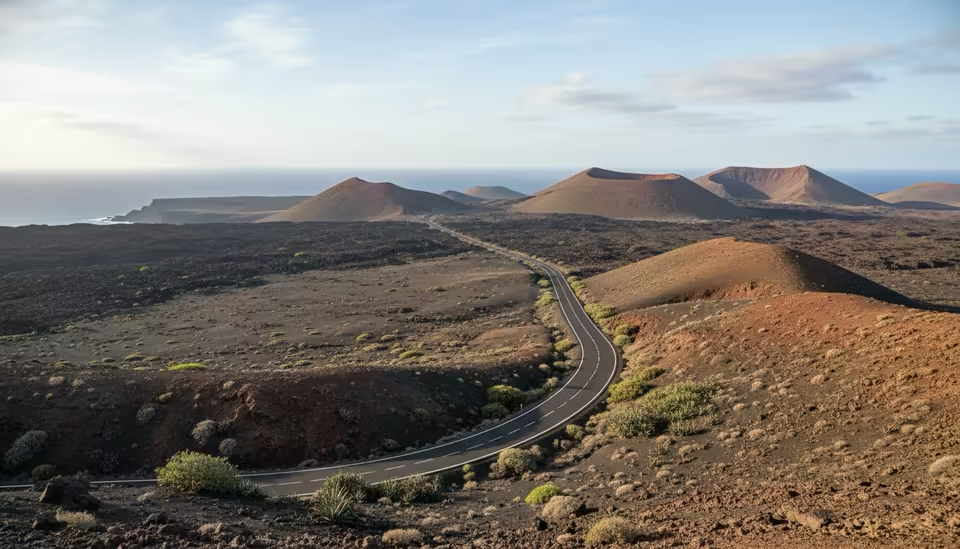
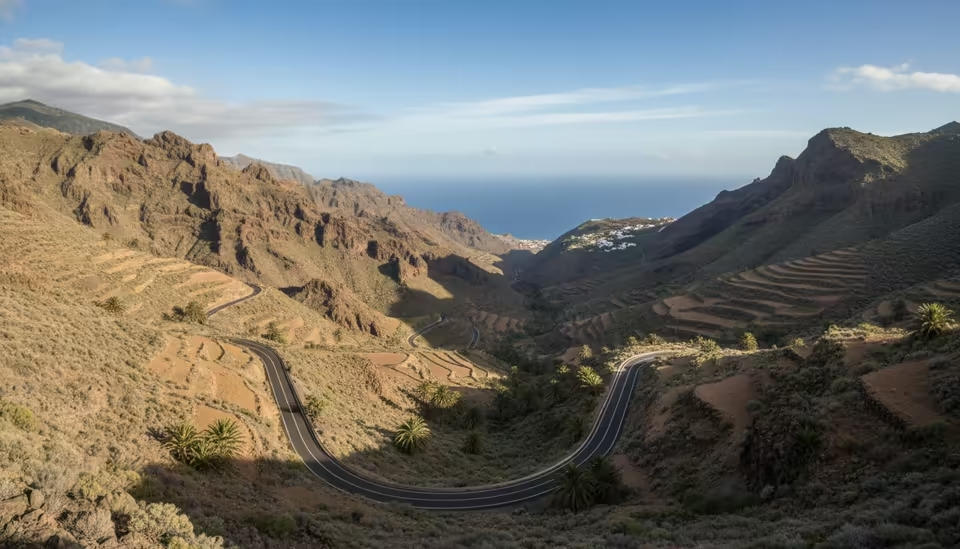
Lanzarote has no single dominant volcano to climb, so the riding is rolling and undulating rather than built around one big ascent. The longest unbroken climb is Tabayesco, about 10.5 km at a steady 5% with a set of lovely hairpins near the top, and on a calm day it is very manageable. The signature rides take you through the black lava fields around Timanfaya National Park, north to the Mirador del Rio viewpoint over La Graciosa, and along the Famara coast. The catch is the wind: the trade winds are almost always present, gusts can top 40 km/h, and a flat road into a headwind can be harder than any climb. That is exactly why Ironman Lanzarote, run over a 180 km loop with around 2,550 m of climbing, has one of the most feared bike legs in triathlon. | Gran Canaria is a proper big-mountain island. From the southern coast, the road to Pico de las Nieves, the highest point at 1,949 m, runs roughly 44 km with about 2,056 m of vertical gain at an average of 4.6%, with a brutal 3 km section near 11% above Ayacata. The truly iconic test is the Valley of the Tears (Valle de los Lagrimas), which starts near sea level and ramps into gradients of up to 25%. Soria, a 12 km climb gaining around 1,100 m at 7%, is known locally as the island's Alpe d'Huez. The interior is a network of long ascents, ridge roads, and deep valleys, with far more vertical variety than Lanzarote and noticeably less wind, though exposed ridgelines still catch a breeze. |
| Climate and season | |
Lanzarote is a dependable winter-sun island. From late autumn through spring, daytime temperatures sit in the mid-teens to low-20s, rainfall is rare, and you can almost always count on dry roads even deep into January. The flip side is exposure: with little tree cover and a flat-ish profile, there is nowhere to hide from the wind, so check the forecast and plan your loop to ride out into the headwind and home with it behind you. Summer is rideable but hotter and busier with general tourists. | Gran Canaria offers the same reliable winter-sun window, which is why it has become a popular pre-season camp base. The south coast around Maspalomas stays warm and dry through the European winter, making it an easy place to rack up training volume while home is cold and wet. The big difference is altitude: when you climb toward Pico de las Nieves you gain real metres, the temperature drops near the top, and the green, cloud-catching north can feel a world away from the arid south. Pack a layer for long descents off the summit. |
| Community and atmosphere | |
Lanzarote's scene leans heavily toward triathlon and multi-sport training. The gravitational centre is Club La Santa in the northwest, a self-contained sports resort that draws pro triathletes and cyclists for sun-drenched training blocks and offers everything from a 15 km loop to the full Ironman route from the door. The island has a strong, focused training-camp feel rather than a sprawling cafe-and-group-ride culture, and the roads are quieter than Tenerife or Mallorca. If you want structure and a sports-camp environment, it fits perfectly. | Gran Canaria is the quietest and most under-the-radar of the big three Canary cycling islands. Its best routes are less famous than Tenerife's or Lanzarote's, which means fewer large groups and less traffic on the climbs, although its pro-camp presence is growing year on year. You are more likely to ride solo or in a small group, picking off long climbs at your own pace, than to fall into a festival-style bunch. For riders who want serious mountains without the crowds, that low-key character is a real draw. |
| Logistics and cost | |
Lanzarote is straightforward and affordable. Most cyclists base themselves in Costa Teguise, Puerto del Carmen, or at Club La Santa, all within easy reach of the island's rental shops and the main loops. Bike rental tends to be slightly cheaper than the bigger cycling islands, with a 7-day mid-range carbon road bike commonly landing around €180 to €300, and good multi-day discounts for longer stays. Flights from Northern Europe are short and frequent through the winter. | Gran Canaria is easy to reach by short winter flight, and the rental and accommodation scene clusters in the south around Maspalomas and Puerto de Mogan, right at the foot of the Soria and Pico de las Nieves rides. A 7-day rental costs a touch more than Lanzarote on average. Because it is a popular pre-season camp window, book bikes and accommodation early for the December-through-February peak if you want the prime training slot. |
The terrain
Lanzarote
Lanzarote has no single dominant volcano to climb, so the riding is rolling and undulating rather than built around one big ascent.
The longest unbroken climb is Tabayesco, about 10.5 km at a steady 5% with a set of lovely hairpins near the top, and on a calm day it is very manageable. The signature rides take you through the black lava fields around Timanfaya National Park, north to the Mirador del Rio viewpoint over La Graciosa, and along the Famara coast. The catch is the wind: the trade winds are almost always present, gusts can top 40 km/h, and a flat road into a headwind can be harder than any climb. That is exactly why Ironman Lanzarote, run over a 180 km loop with around 2,550 m of climbing, has one of the most feared bike legs in triathlon.
Gran Canaria
Gran Canaria is a proper big-mountain island.
From the southern coast, the road to Pico de las Nieves, the highest point at 1,949 m, runs roughly 44 km with about 2,056 m of vertical gain at an average of 4.6%, with a brutal 3 km section near 11% above Ayacata. The truly iconic test is the Valley of the Tears (Valle de los Lagrimas), which starts near sea level and ramps into gradients of up to 25%. Soria, a 12 km climb gaining around 1,100 m at 7%, is known locally as the island's Alpe d'Huez. The interior is a network of long ascents, ridge roads, and deep valleys, with far more vertical variety than Lanzarote and noticeably less wind, though exposed ridgelines still catch a breeze.
Climate and season
Lanzarote
Lanzarote is a dependable winter-sun island.
From late autumn through spring, daytime temperatures sit in the mid-teens to low-20s, rainfall is rare, and you can almost always count on dry roads even deep into January. The flip side is exposure: with little tree cover and a flat-ish profile, there is nowhere to hide from the wind, so check the forecast and plan your loop to ride out into the headwind and home with it behind you. Summer is rideable but hotter and busier with general tourists.
Gran Canaria
Gran Canaria offers the same reliable winter-sun window, which is why it has become a popular pre-season camp base.
The south coast around Maspalomas stays warm and dry through the European winter, making it an easy place to rack up training volume while home is cold and wet. The big difference is altitude: when you climb toward Pico de las Nieves you gain real metres, the temperature drops near the top, and the green, cloud-catching north can feel a world away from the arid south. Pack a layer for long descents off the summit.
Community and atmosphere
Lanzarote
Lanzarote's scene leans heavily toward triathlon and multi-sport training.
The gravitational centre is Club La Santa in the northwest, a self-contained sports resort that draws pro triathletes and cyclists for sun-drenched training blocks and offers everything from a 15 km loop to the full Ironman route from the door. The island has a strong, focused training-camp feel rather than a sprawling cafe-and-group-ride culture, and the roads are quieter than Tenerife or Mallorca. If you want structure and a sports-camp environment, it fits perfectly.
Gran Canaria
Gran Canaria is the quietest and most under-the-radar of the big three Canary cycling islands.
Its best routes are less famous than Tenerife's or Lanzarote's, which means fewer large groups and less traffic on the climbs, although its pro-camp presence is growing year on year. You are more likely to ride solo or in a small group, picking off long climbs at your own pace, than to fall into a festival-style bunch. For riders who want serious mountains without the crowds, that low-key character is a real draw.
Logistics and cost
Lanzarote
Lanzarote is straightforward and affordable.
Most cyclists base themselves in Costa Teguise, Puerto del Carmen, or at Club La Santa, all within easy reach of the island's rental shops and the main loops. Bike rental tends to be slightly cheaper than the bigger cycling islands, with a 7-day mid-range carbon road bike commonly landing around €180 to €300, and good multi-day discounts for longer stays. Flights from Northern Europe are short and frequent through the winter.
Gran Canaria
Gran Canaria is easy to reach by short winter flight, and the rental and accommodation scene clusters in the south around Maspalomas and Puerto de Mogan, right at the foot of the Soria and Pico de las Nieves rides.
A 7-day rental costs a touch more than Lanzarote on average. Because it is a popular pre-season camp window, book bikes and accommodation early for the December-through-February peak if you want the prime training slot.
Which one is right for you?
Pick the destination that matches what you're really looking for.
Ready to ride? Pick your destination.
Browse the full bike inventory at each destination and book the bike that fits your trip.