
Tuscany vs Piedmont for Cycling: Honest Comparison (2027)
Italy's gravel-and-Renaissance heartland against its Alpine-wine north, so you can pick the region that fits how you ride.
Side-by-side comparison
Hard data on Tuscany and Piedmont so you can pick what matters most for your trip.
| Dimension | Tuscany | Piedmont |
|---|---|---|
| Climbing & terrain | ||
| Signature climbing | Rolling hills, no high passes: 4 to 9 km climbs | Real Alpine passes: Colle delle Finestre, Fauniera, Sestriere |
| Wine-country riding | Chianti + Val d'Orcia: gentle vineyard rolls | Langhe (Barolo, Barbaresco): steeper vineyard walls |
| Discipline | ||
| Best discipline | Gravel + road equally: THE European gravel destination | Road dominant: big climbs, some gravel (Finestre is famous) |
| Seasonality | ||
| Best season | April to June, September to October | June to September (high passes open late), plus wine autumn |
| Autumn draw | Vendemmia wine harvest + golden light | Barolo harvest + white truffle season (Alba, October) |
| Vibe | ||
| Cycling scene | Established cyclo-tourism: guided gravel, agriturismi | Under-the-radar: quiet climbs, few international cyclists |
| Off-bike feel | Renaissance towns + Chianti/Brunello wine | Barolo wine + Alba truffles + Savoy-influenced food |
| Practical | ||
| Getting there | Florence or Pisa + a rental car | Turin (Milan as backup) + a rental car |
| Average road bike rental, 7 days | €280 to €500 depending on bike level | €280 to €500 depending on bike level |
Climbing & terrain
Rolling hills, no high passes: 4 to 9 km climbs
Real Alpine passes: Colle delle Finestre, Fauniera, Sestriere
Chianti + Val d'Orcia: gentle vineyard rolls
Langhe (Barolo, Barbaresco): steeper vineyard walls
Discipline
Gravel + road equally: THE European gravel destination
Road dominant: big climbs, some gravel (Finestre is famous)
Seasonality
April to June, September to October
June to September (high passes open late), plus wine autumn
Vendemmia wine harvest + golden light
Barolo harvest + white truffle season (Alba, October)
Vibe
Established cyclo-tourism: guided gravel, agriturismi
Under-the-radar: quiet climbs, few international cyclists
Renaissance towns + Chianti/Brunello wine
Barolo wine + Alba truffles + Savoy-influenced food
Practical
Florence or Pisa + a rental car
Turin (Milan as backup) + a rental car
€280 to €500 depending on bike level
€280 to €500 depending on bike level
In detail
A closer look at how Tuscany and Piedmont compare across the dimensions that matter most.
| Tuscany | Piedmont |
|---|---|
| The terrain | |
Tuscany is rolling, not mountainous. The strade bianche gravel of the Crete Senesi and the Chianti and Val d'Orcia road climbs give constant 4-to-9-kilometre efforts rather than long passes, and the gravel network is the best in Europe. It suits gravel and endurance riders and makes for varied, exploratory weeks, but if you are chasing high-mountain elevation, Tuscany does not have it. | Piedmont delivers real Alpine climbing. The western Alps rise straight out of the region: the Colle delle Finestre (with its famous gravel upper section), the Colle Fauniera, Sestriere, and the Colle dell'Agnello are serious, high passes that have decided Giri d'Italia. Lower down, the Langhe wine hills around Barolo and Barbaresco give steep, punchy vineyard riding. It is a road-dominant region with genuine mountains and far fewer visiting cyclists than Tuscany. |
| Climate and season | |
Tuscany peaks April through June and September through October, with a warm, settled climate and an autumn (vendemmia) that many riders love. Summer is hot on inland gravel; winter is rideable low down. Crucially, Tuscany rides well in spring and autumn when Piedmont's high passes are still cold or closed. | Piedmont's high mountains open June through September, so the prime pass-climbing window is summer, later than Tuscany's. Spring and autumn still offer excellent riding in the Langhe wine hills at lower elevation, and autumn brings the Barolo harvest and Alba white-truffle season. If you specifically want the big cols, plan for summer and pack for cold, exposed descents. |
| Culture and wine | |
Tuscany offers Renaissance towns (Florence, Siena), Chianti and Brunello wine, and a well-developed cyclo-tourism culture anchored by L'Eroica and Strade Bianche. It is the more established, more visited of the two, with easier access to guided tours, rentals, and agriturismo stays. | Piedmont pairs riding with some of Italy's greatest wines, Barolo and Barbaresco, and with Alba's white-truffle season and a refined, Savoy-influenced cuisine. Its cycling scene is quieter and more under-the-radar, which is part of the appeal: you can ride serious cols and the Langhe vineyards without the crowds that gather in more famous regions. |
| Logistics and cost | |
Tuscany is reached via Florence or Pisa and rewards a rental car for the spread-out hills. Renting a bike locally lets you fly with hand luggage, and gravel-specific bikes are easy to find. Multi-base trips (Florence, Chianti, Val d'Orcia) work well. | Piedmont is reached via Turin (with Milan as a backup), and also rewards a car, the Alpine passes and the Langhe are spread across the region. Rental road bikes are available in Turin and the wine towns, priced similarly to Tuscany, but the scene is smaller, so bikes with climbing gears are worth booking ahead for a pass-focused trip. |
The terrain
Tuscany
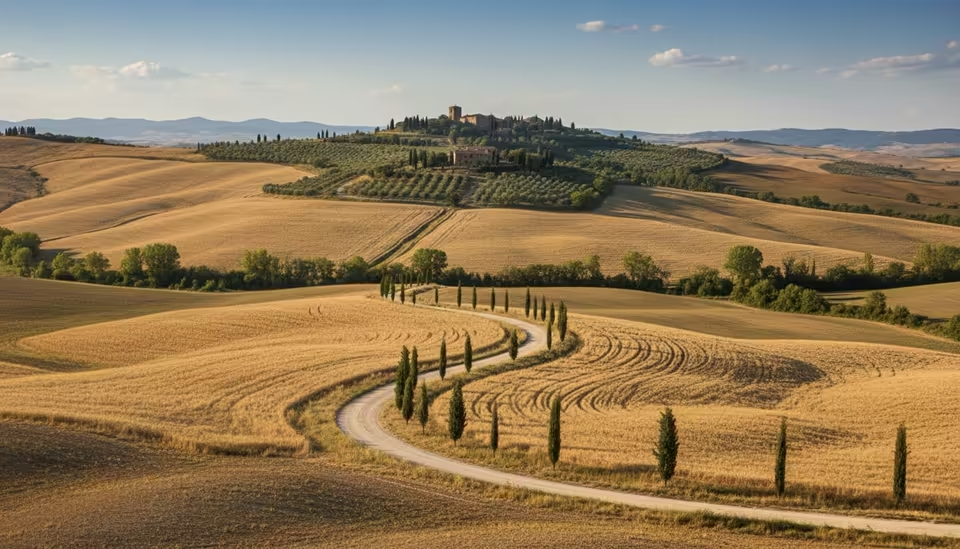
Tuscany is rolling, not mountainous.
The strade bianche gravel of the Crete Senesi and the Chianti and Val d'Orcia road climbs give constant 4-to-9-kilometre efforts rather than long passes, and the gravel network is the best in Europe. It suits gravel and endurance riders and makes for varied, exploratory weeks, but if you are chasing high-mountain elevation, Tuscany does not have it.
Piedmont
Piedmont delivers real Alpine climbing.
The western Alps rise straight out of the region: the Colle delle Finestre (with its famous gravel upper section), the Colle Fauniera, Sestriere, and the Colle dell'Agnello are serious, high passes that have decided Giri d'Italia. Lower down, the Langhe wine hills around Barolo and Barbaresco give steep, punchy vineyard riding. It is a road-dominant region with genuine mountains and far fewer visiting cyclists than Tuscany.
Climate and season
Tuscany
Tuscany peaks April through June and September through October, with a warm, settled climate and an autumn (vendemmia) that many riders love.
Summer is hot on inland gravel; winter is rideable low down. Crucially, Tuscany rides well in spring and autumn when Piedmont's high passes are still cold or closed.
Piedmont
Piedmont's high mountains open June through September, so the prime pass-climbing window is summer, later than Tuscany's.
Spring and autumn still offer excellent riding in the Langhe wine hills at lower elevation, and autumn brings the Barolo harvest and Alba white-truffle season. If you specifically want the big cols, plan for summer and pack for cold, exposed descents.
Culture and wine
Tuscany
Tuscany offers Renaissance towns (Florence, Siena), Chianti and Brunello wine, and a well-developed cyclo-tourism culture anchored by L'Eroica and Strade Bianche.
It is the more established, more visited of the two, with easier access to guided tours, rentals, and agriturismo stays.
Piedmont
Piedmont pairs riding with some of Italy's greatest wines, Barolo and Barbaresco, and with Alba's white-truffle season and a refined, Savoy-influenced cuisine.
Its cycling scene is quieter and more under-the-radar, which is part of the appeal: you can ride serious cols and the Langhe vineyards without the crowds that gather in more famous regions.
Logistics and cost
Tuscany
Tuscany is reached via Florence or Pisa and rewards a rental car for the spread-out hills.
Renting a bike locally lets you fly with hand luggage, and gravel-specific bikes are easy to find. Multi-base trips (Florence, Chianti, Val d'Orcia) work well.
Piedmont
Piedmont is reached via Turin (with Milan as a backup), and also rewards a car, the Alpine passes and the Langhe are spread across the region.
Rental road bikes are available in Turin and the wine towns, priced similarly to Tuscany, but the scene is smaller, so bikes with climbing gears are worth booking ahead for a pass-focused trip.
Which one is right for you?
Pick the destination that matches what you're really looking for.
Ready to ride?
Tuscany is bookable through Ride Out Club. Browse the full inventory and book the bike that fits your trip.
Want to ride Piedmont instead? Tell us and we will look into adding shops there.