Mallorca vs Sicily for Road Cycling: Honest Comparison (2027)
A side-by-side look at Europe's most established cycling island and the underrated volcanic alternative.
Side-by-side comparison
Hard data on Mallorca and Sicily so you can pick what matters most for your trip.
| Dimension | Mallorca | Sicily |
|---|---|---|
| Climbing & terrain | ||
| Iconic climb | Sa Calobra, ~10 km at 7% | Mt Etna, ~30 km at 6% from Catania to Sapienza Refuge |
| Average elevation per riding day | 1,200 to 2,500 m | 1,500 to 2,800 m |
| Terrain variety in one trip | Mountain + flat + coastal in a 30-minute drive | Active volcano + Madonie peaks + lemon-lined coastal lanes |
| Seasonality | ||
| Best season | March to May, September to November | April to June, September to October |
| Pro-cyclist presence | Heavy late January through March (winter camps) | Minimal, but Vincenzo Nibali grew up here |
| Vibe | ||
| Group ride and cycling-cafe scene | Massive, especially around Port de Pollenca in March | Small, mostly clustered around Catania for Etna access |
| Beginner-friendliness | High: gentle coastal routes plus optional mountains | Moderate: variable road quality, less English-language infrastructure |
| Off-bike feel | Beach + restaurant culture: easy with a non-cycling partner | Volcanic landscapes + ancient temples + arguably Italy's best food |
| Practical | ||
| Bike-rental shop density | High: dozens of premium-fleet shops island-wide | Moderate: fewer shops, mostly around Catania and Palermo |
| Average road bike rental, 7 days | €220 to €450 depending on bike level | €180 to €380 depending on bike level |
Climbing & terrain
Sa Calobra, ~10 km at 7%
Mt Etna, ~30 km at 6% from Catania to Sapienza Refuge
1,200 to 2,500 m
1,500 to 2,800 m
Mountain + flat + coastal in a 30-minute drive
Active volcano + Madonie peaks + lemon-lined coastal lanes
Seasonality
March to May, September to November
April to June, September to October
Heavy late January through March (winter camps)
Minimal, but Vincenzo Nibali grew up here
Vibe
Massive, especially around Port de Pollenca in March
Small, mostly clustered around Catania for Etna access
High: gentle coastal routes plus optional mountains
Moderate: variable road quality, less English-language infrastructure
Beach + restaurant culture: easy with a non-cycling partner
Volcanic landscapes + ancient temples + arguably Italy's best food
Practical
High: dozens of premium-fleet shops island-wide
Moderate: fewer shops, mostly around Catania and Palermo
€220 to €450 depending on bike level
€180 to €380 depending on bike level
In detail
A closer look at how Mallorca and Sicily compare across the dimensions that matter most.
| Mallorca | Sicily |
|---|---|
| The terrain | |
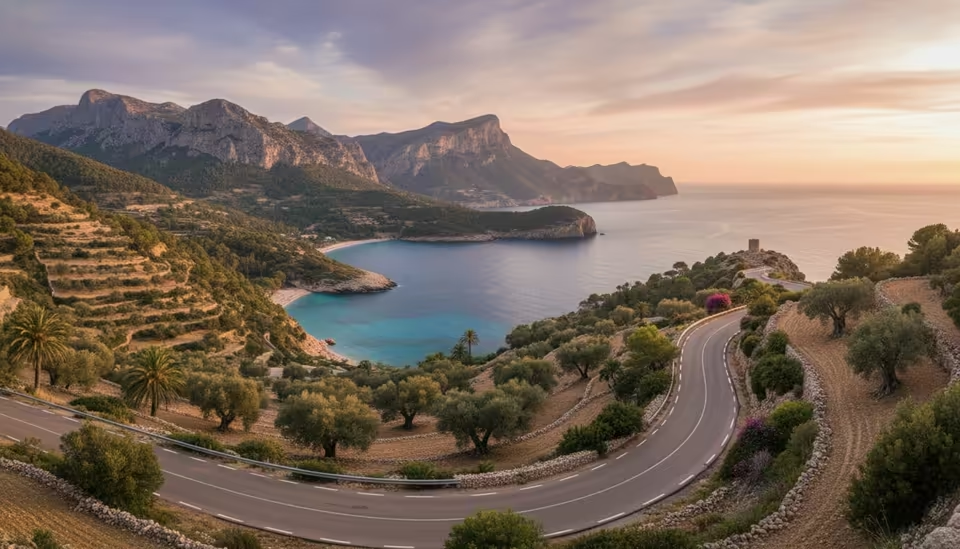
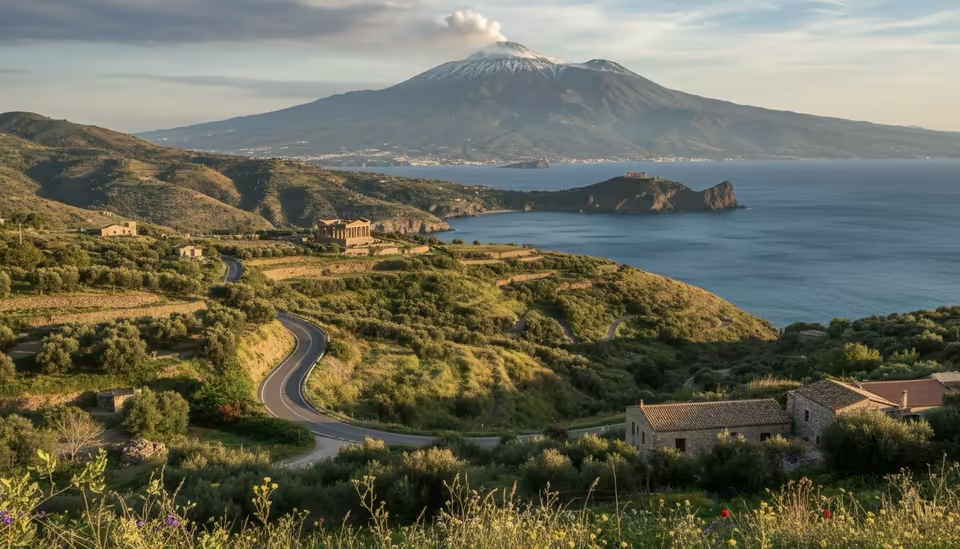
Mallorca offers two distinct riding environments stitched into one island. The Serra de Tramuntana in the northwest gives you the iconic climbs: Sa Calobra, Puig Major, Coll de Soller. The rest of the island is rolling to flat with quiet inland roads through orange groves and long coastal tempo roads along Alcudia bay. Most cyclists mix both within the same trip, a mountain day, a flat day, a varied day on rotation. | Sicily is dominated by Mt Etna, Europe's largest active volcano (~3,330 m), with multiple paved approaches: a long ~30-km climb from Catania to the Sapienza Refuge at ~1,900 m, a steeper north-side climb from Linguaglossa, and a quieter east-side option. North of the island the Madonie mountains offer rolling road riding through medieval villages. The coast has lemon-lined lanes around Cefalù and Taormina. Roads vary from world-class (the main Etna ascents) to genuinely bumpy in the rural interior. |
| Climate and season | |
Mallorca's sweet spot is March through May, then September through November. Spring brings 14 to 22 degrees, full sun, and the legendary cycling buzz of pro teams doing pre-season camps. Summer is rideable but hot. Winter is mild on the coast but the high passes can be cold and occasionally close after rain. | Sicily peaks in April through June and September through October. Spring is the best window: 18 to 25 degrees, wildflowers in the Madonie, Etna still has snow at the top giving dramatic photos. Summer is hot on the coast (30+ degrees) but Etna stays cooler thanks to elevation. Winter is rideable on the coast (12 to 16 degrees) but Etna upper slopes are typically snowed in from late November to March. |
| Community and atmosphere | |
Mallorca's cycling community is the densest in Europe at peak season. Port de Pollenca in March feels like a cycling festival, every cafe has road bikes leaning outside, group rides leave the same roundabout every 30 minutes, and you'll see WorldTour pros doing recovery spins past you on the same coastal roads. It's social by default, and easy to fall into a group of strangers for a 4-hour ride. | Sicily's cycling scene is small but real. Catania is the main hub for Etna trips, local riders know the volcano intimately and welcome visiting cyclists. Italian cycling culture is deep here (Nibali is a Sicilian son), but most rides are solo or small-group, not the festival energy of Mallorca. The reward is roads that feel earned: you'll often climb Etna with a handful of other cyclists rather than a peloton. |
| Logistics and cost | |
Mallorca is cheap to fly to, accessible from every major European airport, and the rental scene is mature: drop your suitcase at the hotel, pick up a Cervelo or Canyon a few hundred metres away, and ride from your front door. A 7-day mid-range carbon road bike rental runs €220 to €350 most months, slightly more in peak season. | Sicily is reachable via Catania (best for Etna) or Palermo (better for the north and Madonie). Direct flights from major European hubs are common but slightly less frequent than Mallorca. Rental is more boutique: a handful of cycling-focused shops (notably around Etna) carry premium fleets, and 7-day rentals run a bit cheaper than Mallorca on average. Plan ahead for high-spec bikes, selection thins out in peak May-June. |
The terrain
Mallorca
Mallorca offers two distinct riding environments stitched into one island.
The Serra de Tramuntana in the northwest gives you the iconic climbs: Sa Calobra, Puig Major, Coll de Soller. The rest of the island is rolling to flat with quiet inland roads through orange groves and long coastal tempo roads along Alcudia bay. Most cyclists mix both within the same trip, a mountain day, a flat day, a varied day on rotation.
Sicily
Sicily is dominated by Mt Etna, Europe's largest active volcano (~3,330 m), with multiple paved approaches: a long ~30-km climb from Catania to the Sapienza Refuge at ~1,900 m, a steeper north-side climb from Linguaglossa, and a quieter east-side option.
North of the island the Madonie mountains offer rolling road riding through medieval villages. The coast has lemon-lined lanes around Cefalù and Taormina. Roads vary from world-class (the main Etna ascents) to genuinely bumpy in the rural interior.
Climate and season
Mallorca
Mallorca's sweet spot is March through May, then September through November.
Spring brings 14 to 22 degrees, full sun, and the legendary cycling buzz of pro teams doing pre-season camps. Summer is rideable but hot. Winter is mild on the coast but the high passes can be cold and occasionally close after rain.
Sicily
Sicily peaks in April through June and September through October.
Spring is the best window: 18 to 25 degrees, wildflowers in the Madonie, Etna still has snow at the top giving dramatic photos. Summer is hot on the coast (30+ degrees) but Etna stays cooler thanks to elevation. Winter is rideable on the coast (12 to 16 degrees) but Etna upper slopes are typically snowed in from late November to March.
Community and atmosphere
Mallorca
Mallorca's cycling community is the densest in Europe at peak season.
Port de Pollenca in March feels like a cycling festival, every cafe has road bikes leaning outside, group rides leave the same roundabout every 30 minutes, and you'll see WorldTour pros doing recovery spins past you on the same coastal roads. It's social by default, and easy to fall into a group of strangers for a 4-hour ride.
Sicily
Sicily's cycling scene is small but real.
Catania is the main hub for Etna trips, local riders know the volcano intimately and welcome visiting cyclists. Italian cycling culture is deep here (Nibali is a Sicilian son), but most rides are solo or small-group, not the festival energy of Mallorca. The reward is roads that feel earned: you'll often climb Etna with a handful of other cyclists rather than a peloton.
Logistics and cost
Mallorca
Mallorca is cheap to fly to, accessible from every major European airport, and the rental scene is mature: drop your suitcase at the hotel, pick up a Cervelo or Canyon a few hundred metres away, and ride from your front door.
A 7-day mid-range carbon road bike rental runs €220 to €350 most months, slightly more in peak season.
Sicily
Sicily is reachable via Catania (best for Etna) or Palermo (better for the north and Madonie).
Direct flights from major European hubs are common but slightly less frequent than Mallorca. Rental is more boutique: a handful of cycling-focused shops (notably around Etna) carry premium fleets, and 7-day rentals run a bit cheaper than Mallorca on average. Plan ahead for high-spec bikes, selection thins out in peak May-June.
Which one is right for you?
Pick the destination that matches what you're really looking for.
Ready to ride? Pick your destination.
Browse the full bike inventory at each destination and book the bike that fits your trip.