
Girona vs Tuscany for Cycling: Honest Comparison (2027)
Two of Europe's most distinctive cyclo-tourism destinations side by side, so you can pick the one that fits how you ride.
Side-by-side comparison
Hard data on Girona and Tuscany so you can pick what matters most for your trip.
| Dimension | Girona | Tuscany |
|---|---|---|
| Climbing & terrain | ||
| Iconic climb | Rocacorba, ~9 km at 6.7% | No single iconic climb: rolling Chianti hills + Monte Amiata |
| Average elevation per riding day | 800 to 1,800 m | 1,000 to 2,200 m |
| Terrain variety in one trip | Catalan hills + Costa Brava coast + Pyrenees day-trip | Chianti road + Crete Senesi gravel (white roads) + coastal Tyrrhenian |
| Seasonality | ||
| Best season | April to June, September to October | April to June, September to October |
| Pro-cyclist presence | Year-round: many WorldTour pros live in town | Strade Bianche pro race + L'Eroica historic event annually |
| Vibe | ||
| Cycling-cafe scene | Concentrated around Eat Sleep Cycle and the Old Town | Distributed: Florence, Siena, Lucca, Chianti agriturismi |
| Discipline lean | Road dominant, gravel as bonus | Gravel + road equally strong: THE European gravel destination |
| Off-bike feel | Medieval Old Town + Catalan tapas: Barcelona 40 minutes away | Renaissance towns + wine country + arguably Italy's best food |
| Practical | ||
| Bike-rental shop density | Moderate but boutique: clustered around the Old Town | Moderate: gravel-specialist shops in Chianti + Florence |
| Average road bike rental, 7 days | €280 to €500 depending on bike level | €280 to €500 depending on bike level |
Climbing & terrain
Rocacorba, ~9 km at 6.7%
No single iconic climb: rolling Chianti hills + Monte Amiata
800 to 1,800 m
1,000 to 2,200 m
Catalan hills + Costa Brava coast + Pyrenees day-trip
Chianti road + Crete Senesi gravel (white roads) + coastal Tyrrhenian
Seasonality
April to June, September to October
April to June, September to October
Year-round: many WorldTour pros live in town
Strade Bianche pro race + L'Eroica historic event annually
Vibe
Concentrated around Eat Sleep Cycle and the Old Town
Distributed: Florence, Siena, Lucca, Chianti agriturismi
Road dominant, gravel as bonus
Gravel + road equally strong: THE European gravel destination
Medieval Old Town + Catalan tapas: Barcelona 40 minutes away
Renaissance towns + wine country + arguably Italy's best food
Practical
Moderate but boutique: clustered around the Old Town
Moderate: gravel-specialist shops in Chianti + Florence
€280 to €500 depending on bike level
€280 to €500 depending on bike level
In detail
A closer look at how Girona and Tuscany compare across the dimensions that matter most.
| Girona | Tuscany |
|---|---|
| The terrain | |
Girona is the centre of a dense network of rolling Catalan hill country. The signature climb is Rocacorba (9 km, twisting up to a TV tower with a panoramic view), but the area's real strength is its hundreds of small interconnected backroads. The Costa Brava coast is a 40-minute ride east; the Pyrenees are reachable as a day-trip if you want a serious climb week stacked onto the trip. | Tuscany is the gravel capital of Europe. The Chianti hills give you classic road riding through vineyards, rolling 4-to-9-kilometre climbs between medieval villages. The Crete Senesi white-gravel roads (made famous by the Strade Bianche pro race) wind through clay-hill countryside south of Siena. The Val d'Orcia is postcard Tuscany: cypress-lined ridges, golden fields, Pienza and Montalcino as base towns. Coastal Tyrrhenian roads are quieter than you'd expect. |
| Climate and season | |
Girona is rideable year-round thanks to its lower elevation and milder Catalan climate. January temperatures sit around 8 to 14 degrees with regular sun. The peak window is April through June, when the days are long and the Catalan countryside is at its greenest. Summer is hot but inland forest sections stay shaded. The lack of a serious mountain pass means bad weather rarely closes a ride. | Tuscany peaks in April through June (wildflowers, mild temps, gravel events) and September through October (vendemmia wine harvest, golden light, tourist crowds thinning). Summer is hot on the inland gravel routes, most cyclists go out at sunrise then call it. Winter cycling is possible on the coast and lower Chianti, but inland hills can be cold and occasionally snowy. |
| Community and atmosphere | |
Girona's scene is small but dense in everyday life. Many WorldTour pros (and almost the entire English-speaking pro-cycling diaspora) live in or around the Old Town. Eat Sleep Cycle on Plaza Catalunya is the hub: it's common to share a cortado with a Grand Tour stage winner without realising it. The vibe is "we live and ride here" rather than "we're here for two weeks of camp". | Tuscany's cycling identity is deeply rooted in heritage. L'Eroica (the vintage cycling festival in Gaiole each October) and Strade Bianche (the pro race in March) anchor the calendar. Italian cycling culture is everywhere: every village has a bar that doubles as a cyclist's pit stop. The English-speaking cycling-tourism scene is smaller than Girona's, guided tours and agriturismi are the typical access point for visitors. |
| Logistics and cost | |
Girona is reachable via Barcelona (40 minutes by train, hourly service), flights into Barcelona are typically cheaper than direct to Girona. Once in town, Eat Sleep Cycle, La Fabrica cafe, the bike rentals, and your hotel are likely within 600 m of each other. | Tuscany is reachable via Florence or Pisa. From there, you'll need a rental car or guided-tour transfers, Tuscany rewards multi-base trips: a few days in Florence, a few in Chianti, maybe a coastal-Tyrrhenian leg. Agriturismi (rural farmstay-restaurants) are the classic base. 7-day rentals match Girona's pricing for road, slightly less for gravel-specific bikes. |
The terrain
Girona
Girona is the centre of a dense network of rolling Catalan hill country.
The signature climb is Rocacorba (9 km, twisting up to a TV tower with a panoramic view), but the area's real strength is its hundreds of small interconnected backroads. The Costa Brava coast is a 40-minute ride east; the Pyrenees are reachable as a day-trip if you want a serious climb week stacked onto the trip.
Tuscany
Tuscany is the gravel capital of Europe.
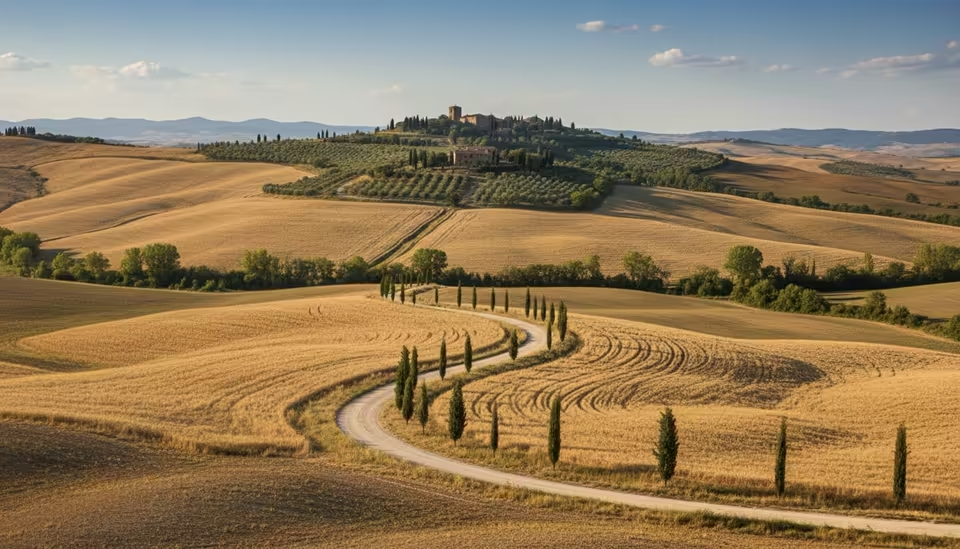
The Chianti hills give you classic road riding through vineyards, rolling 4-to-9-kilometre climbs between medieval villages. The Crete Senesi white-gravel roads (made famous by the Strade Bianche pro race) wind through clay-hill countryside south of Siena. The Val d'Orcia is postcard Tuscany: cypress-lined ridges, golden fields, Pienza and Montalcino as base towns. Coastal Tyrrhenian roads are quieter than you'd expect.
Climate and season
Girona
Girona is rideable year-round thanks to its lower elevation and milder Catalan climate.
January temperatures sit around 8 to 14 degrees with regular sun. The peak window is April through June, when the days are long and the Catalan countryside is at its greenest. Summer is hot but inland forest sections stay shaded. The lack of a serious mountain pass means bad weather rarely closes a ride.
Tuscany
Tuscany peaks in April through June (wildflowers, mild temps, gravel events) and September through October (vendemmia wine harvest, golden light, tourist crowds thinning).
Summer is hot on the inland gravel routes, most cyclists go out at sunrise then call it. Winter cycling is possible on the coast and lower Chianti, but inland hills can be cold and occasionally snowy.
Community and atmosphere
Girona
Girona's scene is small but dense in everyday life.
Many WorldTour pros (and almost the entire English-speaking pro-cycling diaspora) live in or around the Old Town. Eat Sleep Cycle on Plaza Catalunya is the hub: it's common to share a cortado with a Grand Tour stage winner without realising it. The vibe is "we live and ride here" rather than "we're here for two weeks of camp".
Tuscany
Tuscany's cycling identity is deeply rooted in heritage.
L'Eroica (the vintage cycling festival in Gaiole each October) and Strade Bianche (the pro race in March) anchor the calendar. Italian cycling culture is everywhere: every village has a bar that doubles as a cyclist's pit stop. The English-speaking cycling-tourism scene is smaller than Girona's, guided tours and agriturismi are the typical access point for visitors.
Logistics and cost
Girona
Girona is reachable via Barcelona (40 minutes by train, hourly service), flights into Barcelona are typically cheaper than direct to Girona.
Once in town, Eat Sleep Cycle, La Fabrica cafe, the bike rentals, and your hotel are likely within 600 m of each other.
Tuscany
Tuscany is reachable via Florence or Pisa.
From there, you'll need a rental car or guided-tour transfers, Tuscany rewards multi-base trips: a few days in Florence, a few in Chianti, maybe a coastal-Tyrrhenian leg. Agriturismi (rural farmstay-restaurants) are the classic base. 7-day rentals match Girona's pricing for road, slightly less for gravel-specific bikes.
Which one is right for you?
Pick the destination that matches what you're really looking for.
Ready to ride?
Tuscany is bookable through Ride Out Club. Browse the full inventory and book the bike that fits your trip.
Want to ride Girona instead? Tell us and we will look into adding shops there.