
Road cycling in Mallorca: routes, climbs and what to expect
Updated: March 2026
Mallorca offers unparalleled road cycling, attracting riders with its diverse terrain, exceptional road quality, and stunning scenery. From challenging mountain passes to serene coastal routes, the island provides an ideal backdrop for both intense training and relaxed cycling holidays.
Find your bike rental in MallorcaWhat makes Mallorca a world-class cycling destination
Mallorca stands out as a premier global cycling destination due to its combination of diverse landscapes, pristine road surfaces, and consistent Mediterranean climate. The island provides everything from the dramatic climbs of the Serra de Tramuntana mountains to flat coastal loops, catering to every type of road cyclist.
The Serra de Tramuntana, a UNESCO World Heritage site, offers iconic climbs and descents, while the flatter central plains provide rolling routes ideal for endurance training. Its compact size means you can transition from mountains to coast in a single ride.
Mallorca is renowned for its smooth, well-maintained asphalt, making for an enjoyable and safe riding experience. Significant investment in road infrastructure caters to the island's booming cycling tourism.
Palma de Mallorca Airport (PMI) is just a short transfer from many popular cycling bases like Port de Pollença, Alcúdia, and Peguera, allowing for quick transitions from arrival to saddle.
Professional cycling teams frequently choose Mallorca for their spring training camps, drawn by the varied terrain and predictable weather. Casual riders benefit from the same high-quality infrastructure and extensive network of cycling-friendly services, from bike shops to cafés.
The best cycling routes in Mallorca
Mallorca boasts an extensive network of exceptional cycling routes, each offering unique challenges and breathtaking vistas, from the world-famous Sa Calobra climb to gentle coastal explorations.
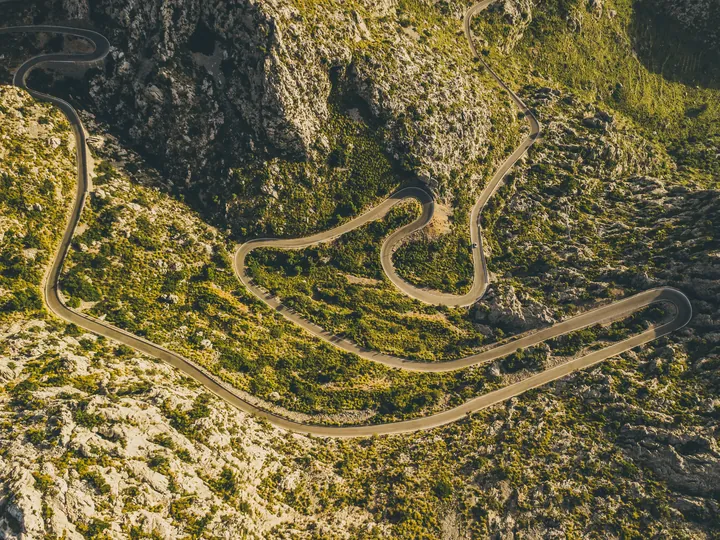
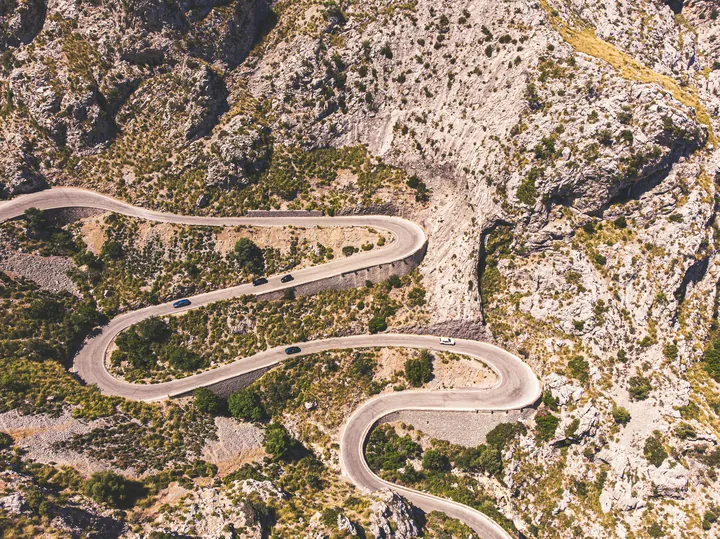
Sa Calobra: This iconic climb is a must-do for experienced riders, featuring 9.4 km of ascent with an average gradient of 7.2% and 26 serpentine hairpins. It begins with a descent, meaning you must climb back out, making it a true test of endurance. The highest point reaches 682 meters.
Cap de Formentor: Offering stunning coastal views, the ride to Cap de Formentor lighthouse covers approximately 20 km one-way from Port de Pollença, with rolling terrain and several short, punchy climbs. The road narrows towards the lighthouse, providing dramatic cliffside riding.
Puig Major via Sóller: The highest climbable road on Mallorca takes you up Puig Major, the island's highest peak (1445m), although the road itself only reaches a tunnel at around 850m. The ascent from Sóller is approximately 14 km with an average gradient of 6%. This route challenges with sustained climbing and panoramic views.
Coll de Sóller (old road): Instead of the tunnel, experienced riders can tackle the old road to Coll de Sóller, a 7 km climb with an average gradient of 5.5% and over 50 hairpins. It's often quieter than the main road and offers a classic cycling experience.
Lluc monastery loop: This intermediate route typically involves climbing to the historic Lluc Monastery (525m elevation). A popular loop from Alcúdia or Port de Pollença might cover 80-100 km with 1000-1500 meters of elevation, offering a mix of rolling hills and gentle climbs suitable for a strong intermediate rider.
Es Pla (central plains): For beginner cyclists or recovery rides, the flat and gently rolling roads of Es Pla in central Mallorca provide a contrasting experience. Routes here often cover 50-80 km with minimal elevation gain, connecting charming villages like Petra and Sineu.
Rent a road bike in MallorcaPro cycling and training camps in Mallorca
Mallorca is a key destination for professional cycling, with numerous WorldTour teams choosing the island for their pre-season training camps and hosting prestigious early-season races. This professional presence ensures high-quality roads and a deep understanding of cycling infrastructure across the island.
Teams like Ineos Grenadiers, Jumbo-Visma, and Movistar frequently conduct winter and spring training camps here. They are drawn by the mild climate, diverse training terrain, and excellent logistics for support staff.
The island hosts the "Challenge Mallorca" (Trofeu Palma, Trofeu Serra de Tramuntana, etc.) in late January/early February, an early-season series of one-day races that attract many professional riders. These events highlight the challenging terrain of the Tramuntana mountains and the fast flat sections.
The routes used by professionals are generally well-maintained and traffic-calmed during races. Outside of race days, you can ride the exact same climbs and descents, often finding segments on Strava where pros have set formidable times, providing a unique benchmarking experience.
What to know before your first ride in Mallorca
Before your first road bike ride in Mallorca, it's essential to understand local road rules, traffic conditions, and practical tips for hydration and safety to ensure an enjoyable experience.
Cyclists must obey all traffic laws. Riding two abreast is permitted if traffic conditions allow, but you must move to single file if a vehicle approaches from behind. Helmets are mandatory by law for all cyclists on public roads.
While generally cycling-friendly, some main roads, particularly those connecting larger towns, can experience heavy traffic, especially during peak tourist season (July-August). Always be visible and anticipate car movements.
The dry Mediterranean climate, especially from May to September, necessitates frequent hydration. Villages are typically 10-20 km apart in the mountains, offering water fountains or cafés. Carry two large water bottles on every ride.
In summer, start your rides early, ideally before 8:00 AM, to avoid the intense midday heat and heavier traffic. Temperatures can exceed 30°C by noon. In spring and autumn, mid-morning starts are pleasant.
The general emergency number in Spain is 112 for police, ambulance, or fire services. Ensure your mobile phone is charged and consider carrying a small first-aid kit and basic repair tools.
Be aware of strong winds, particularly in coastal areas like Cap de Formentor, which can be challenging. Some mountain roads have steep descents and tight hairpins; control your speed and be aware of gravel or debris, especially after rain.
Beginner vs experienced cyclist choosing the right routes
Choosing the correct road cycling routes in Mallorca based on your experience level ensures both safety and enjoyment, with options ranging from gentle coastal paths to demanding mountain ascents.
Beginner cyclists should focus on the flatter regions of Es Pla, which offer a network of quiet, low-gradient roads connecting villages like Sineu, Petra, and Algaida. These routes typically involve 30-70 km distances with less than 500 meters of elevation gain, ideal for building confidence and fitness.
Riders with moderate fitness can explore the foothills of the Serra de Tramuntana or enjoy rolling coastal routes. The ride to Lluc Monastery from Pollença (around 80 km, 1000m elevation) provides a good challenge without extreme gradients. The ride towards Artà or Sant Salvador in the east also offers enjoyable climbs.
Advanced riders will thrive in the challenging terrain of the Serra de Tramuntana mountains. Essential climbs include Sa Calobra, Puig Major, and Coll de Sóller via the old road. Expect rides of 100-150 km with 2000-3000 meters of elevation, often incorporating multiple major ascents in a single outing.
For the mountains, a compact chainset (50/34) paired with an 11-30 or 11-32 cassette is highly recommended, even for strong riders. Tyre widths of 25-28mm offer optimal comfort and grip on Mallorca's varied road surfaces.
FAQ
What is the best time of year for road cycling in Mallorca?The best time for road cycling in Mallorca is generally from March to May and September to October. These months offer mild temperatures, averaging 18-22°C, lower tourist crowds, and ideal riding conditions. July and August are often too hot, with temperatures frequently exceeding 30°C.
Do I need to be an experienced cyclist to enjoy Mallorca?No, Mallorca caters to all fitness levels, offering a wide range of routes from flat, easy loops in the central plains to very challenging mountain climbs. Beginners can enjoy quiet country roads, while advanced riders can tackle iconic ascents like Sa Calobra.
Is it better to rent a bike in Mallorca or bring my own?Renting a high-quality road bike in Mallorca is often more convenient and cost-effective than transporting your own bike, especially for trips shorter than two weeks. Many rental shops offer excellent carbon road bikes, often including delivery and collection services, allowing you to avoid airline baggage fees and potential damage. You can find excellent options by searching for The best bike rental Mallorca options for your cycling trip.
Should I cycle in Mallorca with a group or solo?Both group and solo cycling in Mallorca offer unique benefits; your choice depends on personal preference and goals. Group rides, often organised by local tour operators, provide companionship, support, and pre-planned routes, while solo riding offers flexibility to explore at your own pace and choose spontaneous detours.
What are typical daily distances for road cycling in Mallorca?Typical daily distances for road cycling in Mallorca vary significantly based on your fitness level and chosen terrain, ranging from 50-80 km for recreational riders on flatter routes to 100-150 km with substantial elevation gain for experienced cyclists tackling mountain passes. Many cycling holidays average 80-120 km per day.
Mallorca truly offers a complete road cycling experience, combining stunning landscapes, world-class infrastructure, and a vibrant cycling culture. Whether you seek the challenge of mountain climbs or the serenity of coastal routes, the island promises an unforgettable cycling adventure.
Compare bike rentals in Mallorca