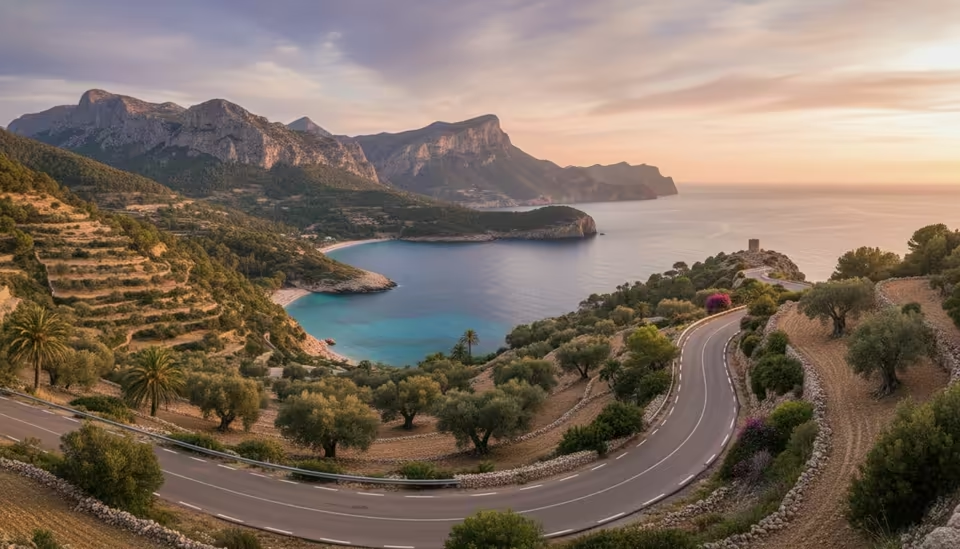
Mallorca is the most established road cycling destination in Europe, and for many riders it is simply the benchmark every other island is measured against. The reasons stack in its favour: a compact size that puts mountains, plains and coast within a single ride, hundreds of kilometres of smooth, well surfaced roads, drivers used to sharing them with cyclists, and a season that runs when most of northern Europe is still indoors. Add an international airport ten minutes from the city and a dense network of bike shops, mechanics and cyclist friendly hotels, and you have a place built, almost by accident, for the perfect riding trip.
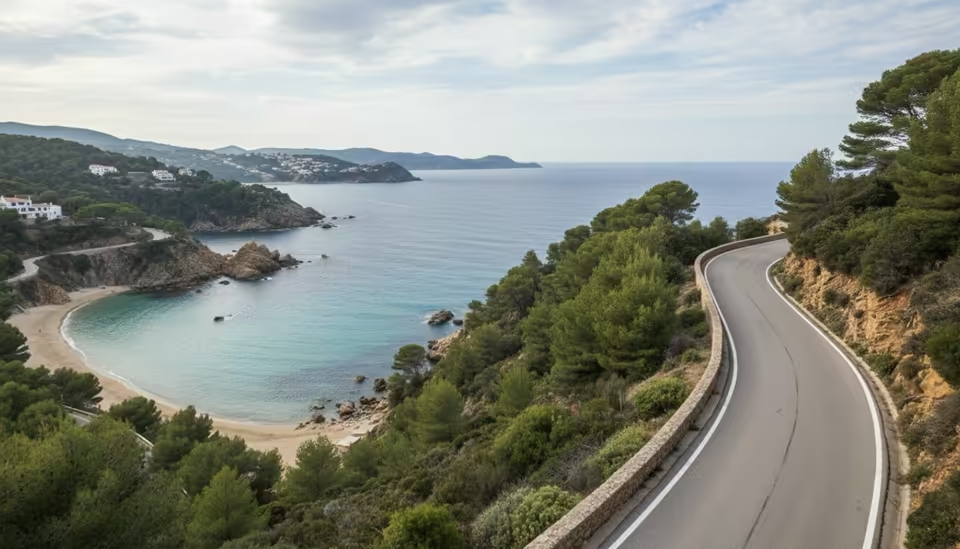
The headline act is the Serra de Tramuntana, the mountain range that runs the length of the north west coast. This is where the famous climbs live. Sa Calobra is the one everyone comes for, a sinuous descent to the sea followed by the same road back up, roughly ten kilometres at seven percent with the hairpins that fill every cycling photographer's reel. Above it sits the Puig Major, the island's highest paved climb, while the Coll de Sóller, the Coll de Femenia and the long road to the Cap Formentor lighthouse give you weeks of riding without ever repeating yourself. None of it is brutally steep; the Tramuntana rewards rhythm, not raw power, which is why it suits riders of every level.
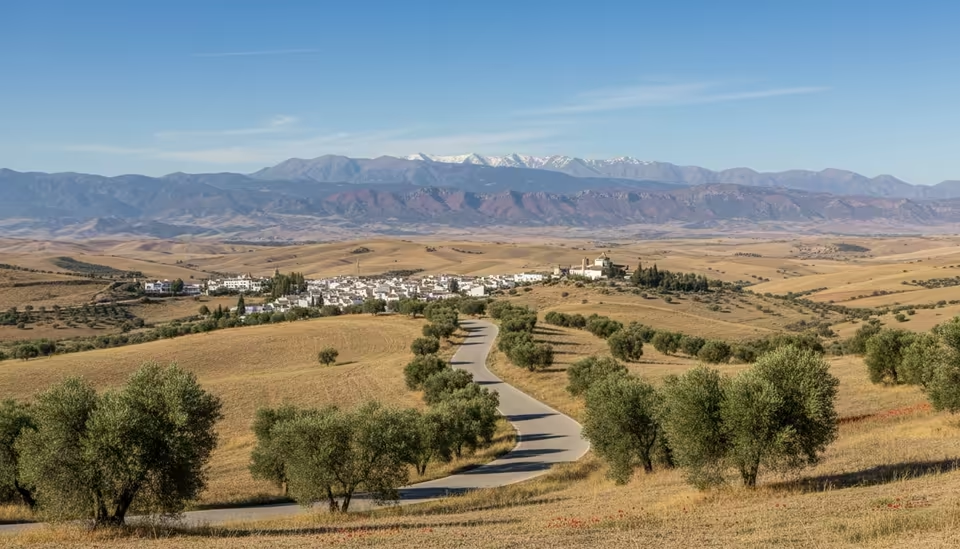
Away from the mountains, the centre of the island, Es Pla, is a different world. Quiet, flat to gently rolling lanes link old stone villages like Sineu, Petra and Santa Maria, perfect for base miles, recovery spins and group rides that flow at a social pace. The southern and eastern coasts add fast, open roads and the chance to finish at a beach. This balance is Mallorca's real secret: you can stack a brutal mountain day and an easy flat day back to back without ever moving hotel.
Timing matters. Spring, from late February to May, is the classic camp season, when the roads fill with teams and the almond blossom gives way to long, mild days. Autumn, September and October, is just as good and a little quieter. Winter stays rideable and far softer than the mainland, though the high passes can be cold and occasionally closed. Summer is hot, best ridden early, but the sea breeze and dawn starts keep it manageable. There is no truly bad time to ride here, only different ones.
Part of Mallorca's pull is the culture that has grown up around the bike. Cafe stops are an institution, from the fresh orange juice at the foot of the Coll de Sóller to the coffee and cake halt at Cafè 3.60 in Caimari, and on any spring morning the climbs hum with riders from a dozen countries. Drivers are used to bunches on the road, locals wave you through, and in the early season the whole island seems to run on cyclist time. Organised group rides and camps roll out almost daily in spring, so it is easy to fall in with others if you want company on a long day, while solo riders can just as happily set their own pace. Bike shops are everywhere, spares and a quick service are never far away, and almost every hotel keeps a lockable bike room. That social, low stress atmosphere, as much as the terrain, is what turns a first Mallorca trip into an annual one.
Where you stay shapes the trip. Palma, the capital, offers a real city with the airport on the doorstep and roads heading straight for the Tramuntana foothills. Port de Pollença and Alcúdia, on the north coast, put the biggest climbs and the Formentor road within reach of breakfast, which is why the pro camps gather there. Can Picafort, on the flat bay nearby, makes an easy, good value base for groups. Each suits a different kind of rider; the city guides below break down what to expect from each.
As for what to ride, Mallorca is road cycling country first. A light endurance or race bike with climbing gears is the natural choice for the Tramuntana, and most rental shops stock current carbon models from the major brands, often with disc brakes, electronic shifting and compact gearing. Gravel is growing fast, with dirt roads and old farm tracks across Es Pla and into the foothills, and a few shops carry triathlon and time trial bikes for athletes training for the island's busy race calendar. Whatever you ride, booking ahead in peak season is wise.
Logistics are about as easy as cycling travel gets. Palma airport connects to most of Europe, transfers to the north coast take under an hour, and renting on the island means you can fly with hand luggage and skip the bike bag entirely. Pick up a bike that fits, set your own pedals and saddle, and ride out the same day. That simplicity, on top of the riding itself, is why so many cyclists come back to Mallorca year after year. Browse the bikes above, or jump to one of the city guides to start planning your trip.


.png&w=3840&q=75)
.png%3Fv%3Dc8cbca49-8a31-4a5f-bd2f-06e764a3426c&w=3840&q=75)


.png%3Fv%3D070f377d-0237-4e2a-8ea0-d09312357e5e&w=3840&q=75)


